Greek, Europe’s oldest language with a 4,000-year history Celebrating World Greek Language Day Commemorative event held at the University of Tokyo

In November 2025, UNESCO declared February 9th of each year as “World Greek Language Day” in recognition of the Greek language and its contributions to universal culture.
UNESCO’s designation of February 9th as “World Greek Language Day” holds symbolic and special significance. On this day in 1857, Greece’s national poet, Dionysios Solomos, passed away. Solomos was an artist whose work embodied in modern Greek literature the organic connection between the Greek language and Greek identity and the most universal value: “freedom.”
Even today, it is no exaggeration to say that Greek holds a special place among the world’s languages. With a history of over 4,000 years as a language of communication, Greek has had a profound influence on many other languages, including English.
While the Greek language has evolved over the ages, it has demonstrated a continuity of vocabulary, rules and alphabet and boasts a longer than 3,000-year history as a written language. In ancient times, great historical figures such as Homer, Plato, Aristotle, Hippocrates, and Archimedes used Greek as a means of expression, leaving their mark on literature, philosophy, medicine and mathematics. In modern times, Greek has also been a key influence in the fields of new technology and bioethics. Greek, the official language of Greece and Cyprus, is recognized worldwide for its timeless influence on people’s thoughts and communication.
From this perspective, Greek can be thought of as the “intangible Parthenon.” In other words, as a language, it is precise, well-proportioned, and like a harmonious structure.
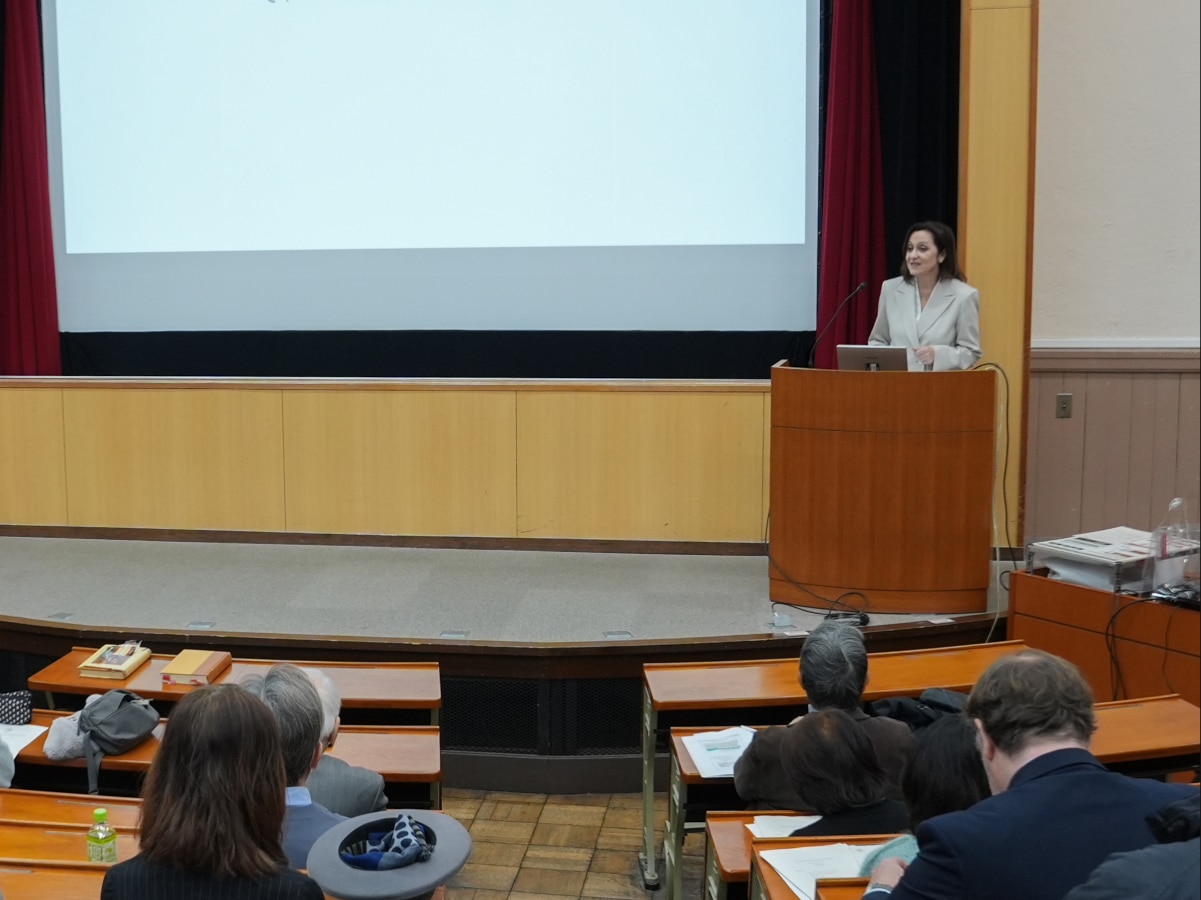
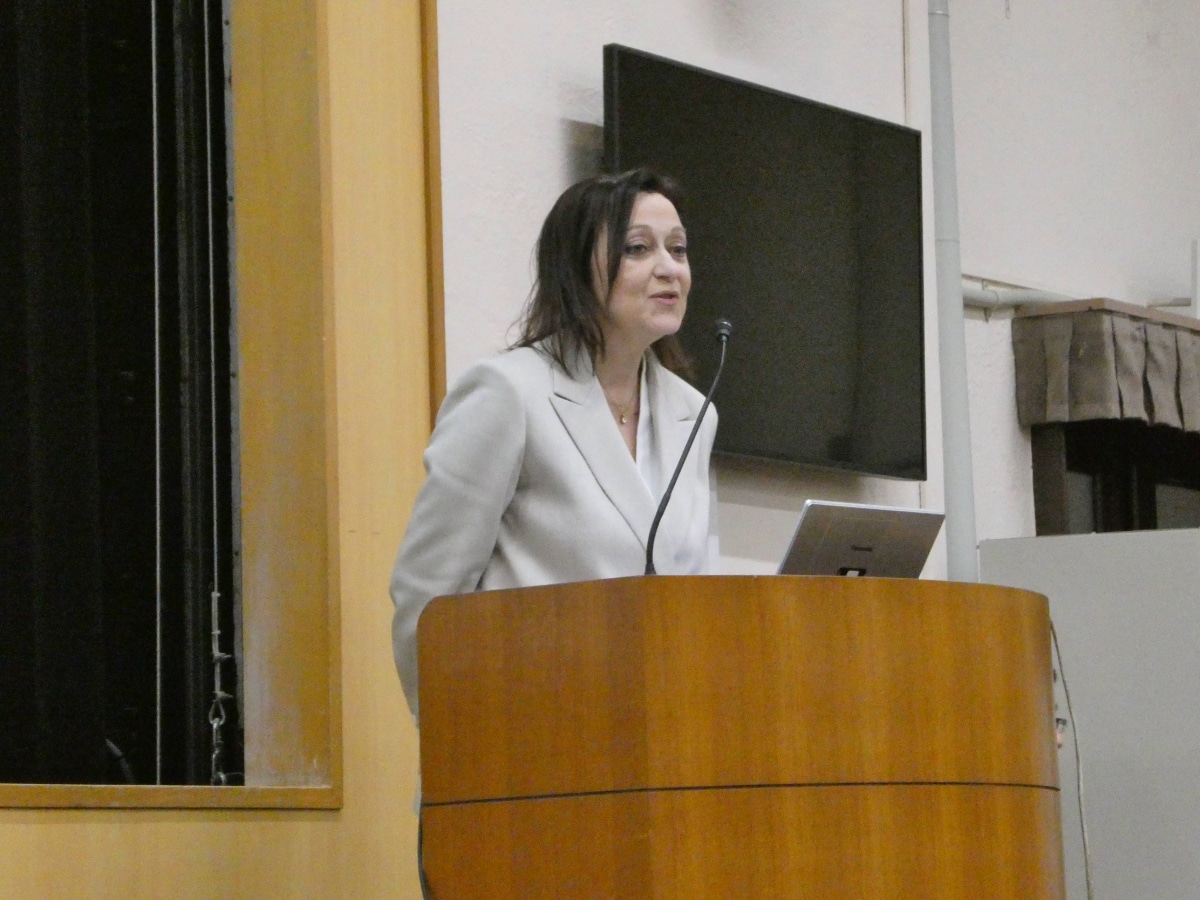
In Japan, there are few opportunities to come into contact with a language as historic as Greek and the culture it has woven. This lecture, co-hosted by the Greek Embassy and the University of Tokyo, featured valuable research presentations by Greek language researchers from four universities (University of Tokyo, International Christian University, Otsuma Women’s University, and Kyoritsu Women’s University). One of the presentations highlighted the connection between the ancient Greek tragedy “Ajax” and traditional Japanese culture’s themes of tragedy and impermanence.
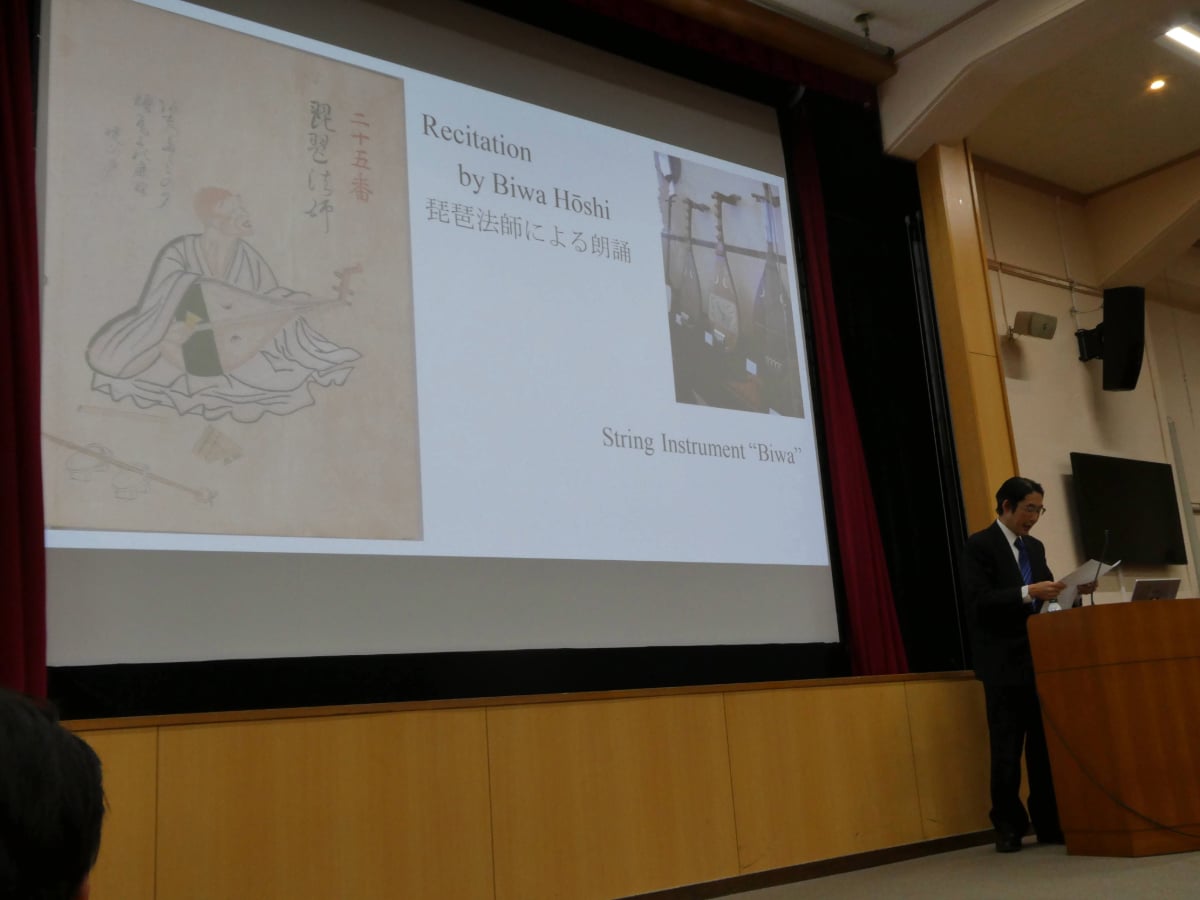
Another notable commonality was the fact that both Greek tragedy and Noh are performed with masks. The narration and performance, which recreated ancient Greek instruments and music, were also fascinating and evoked memories of that time.
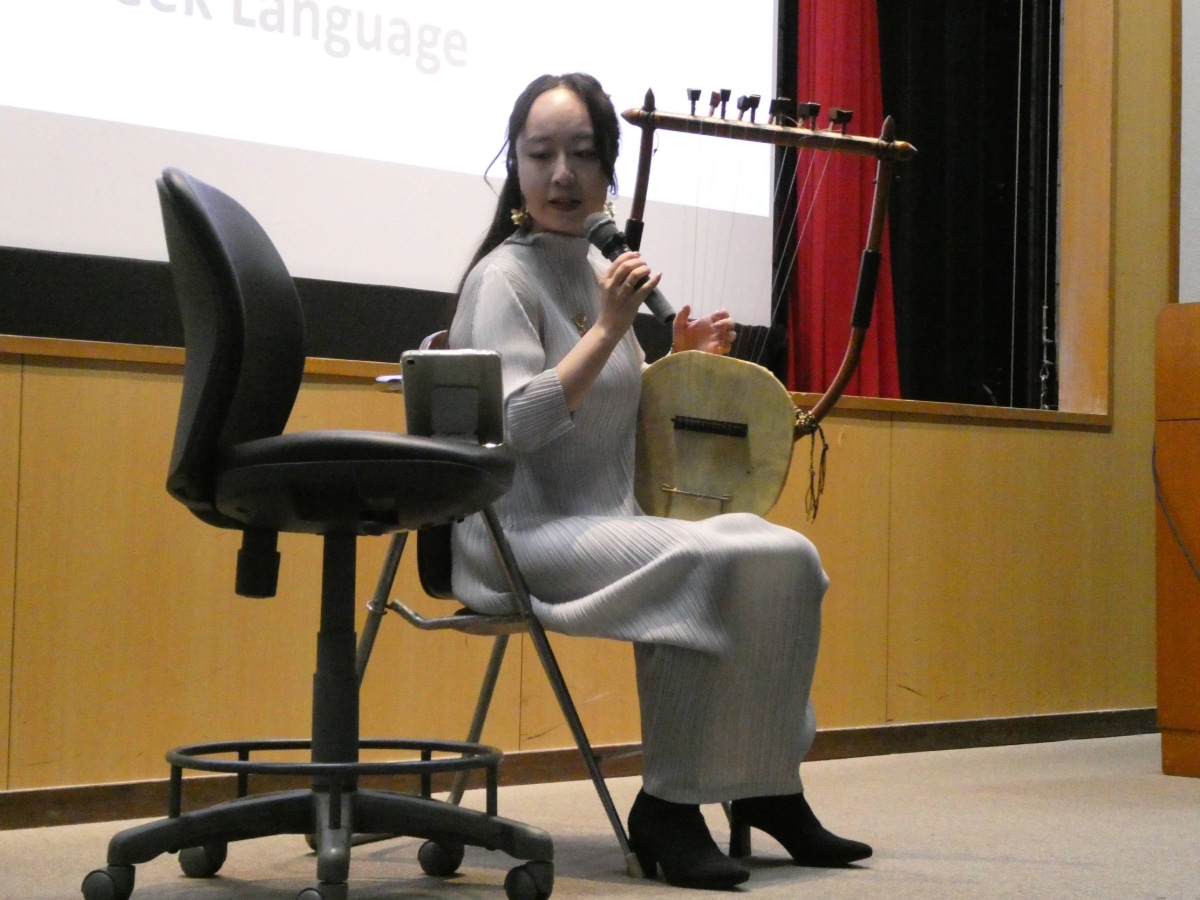
This event made everyone realize that Greek has developed through the Hellenistic, Roman, and Byzantine periods and into the 19th century, and continues to this day. It will continue to evolve and connect to the future.