Romanian Christmas: Surrounded by Prayer and Tradition
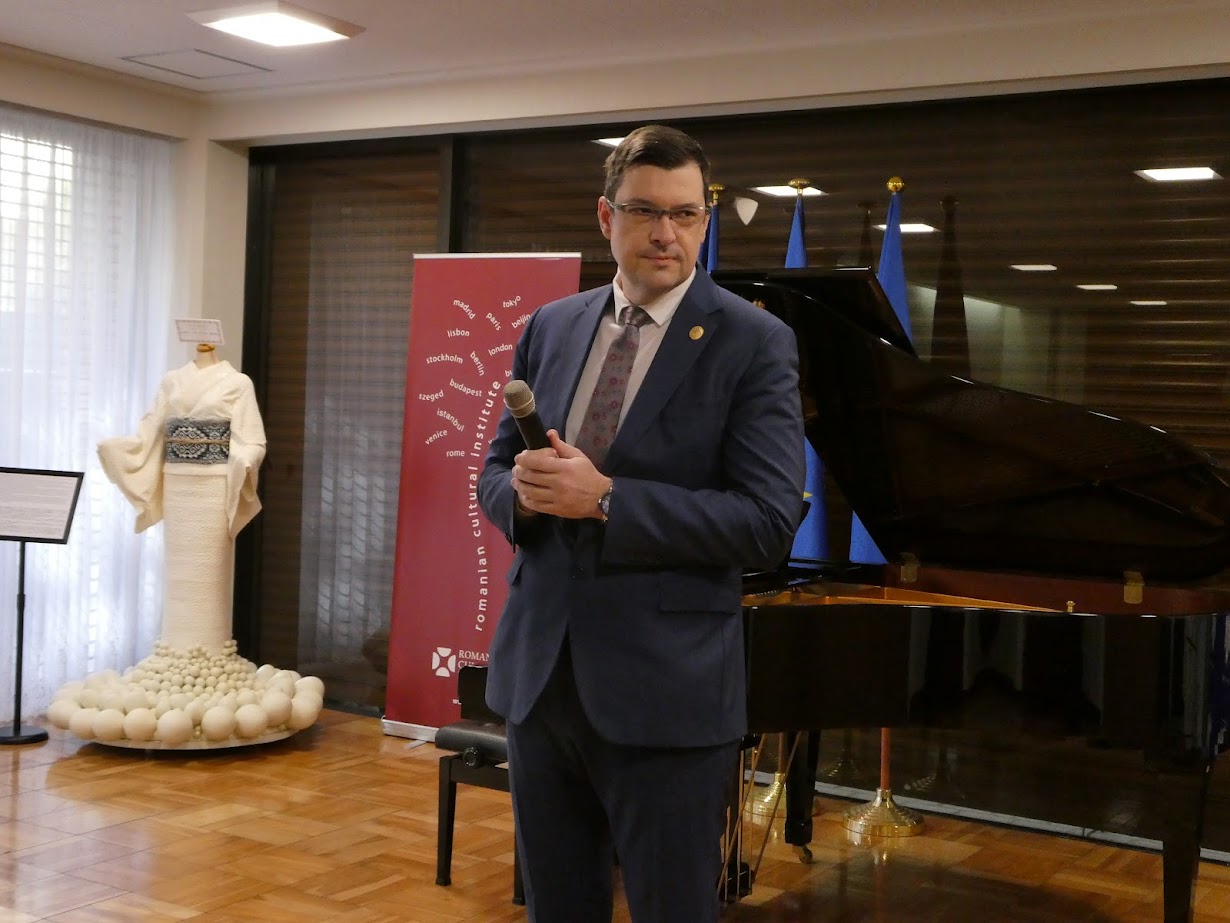
The Romanian Embassy is committed to promoting Romanian culture in Japan including through the organization of events that reflect Romanian traditions. Romania, which has produced such outstanding artists as Brancusi, Giorgio Enescu, Sergiu Celibidache, and Ileana Cotrubas, continues to boast an exceptionally high level of culture.
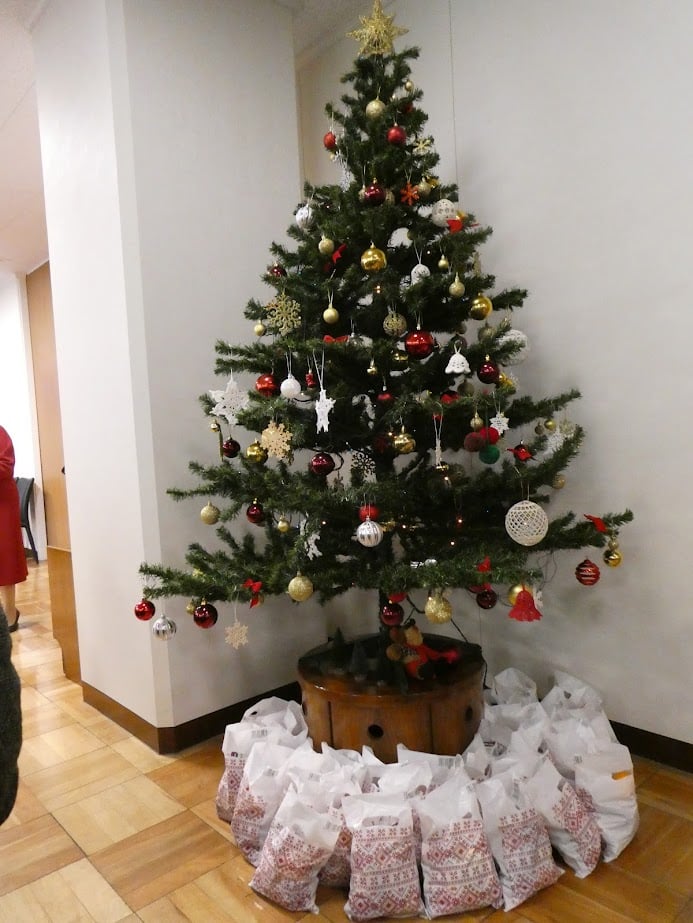
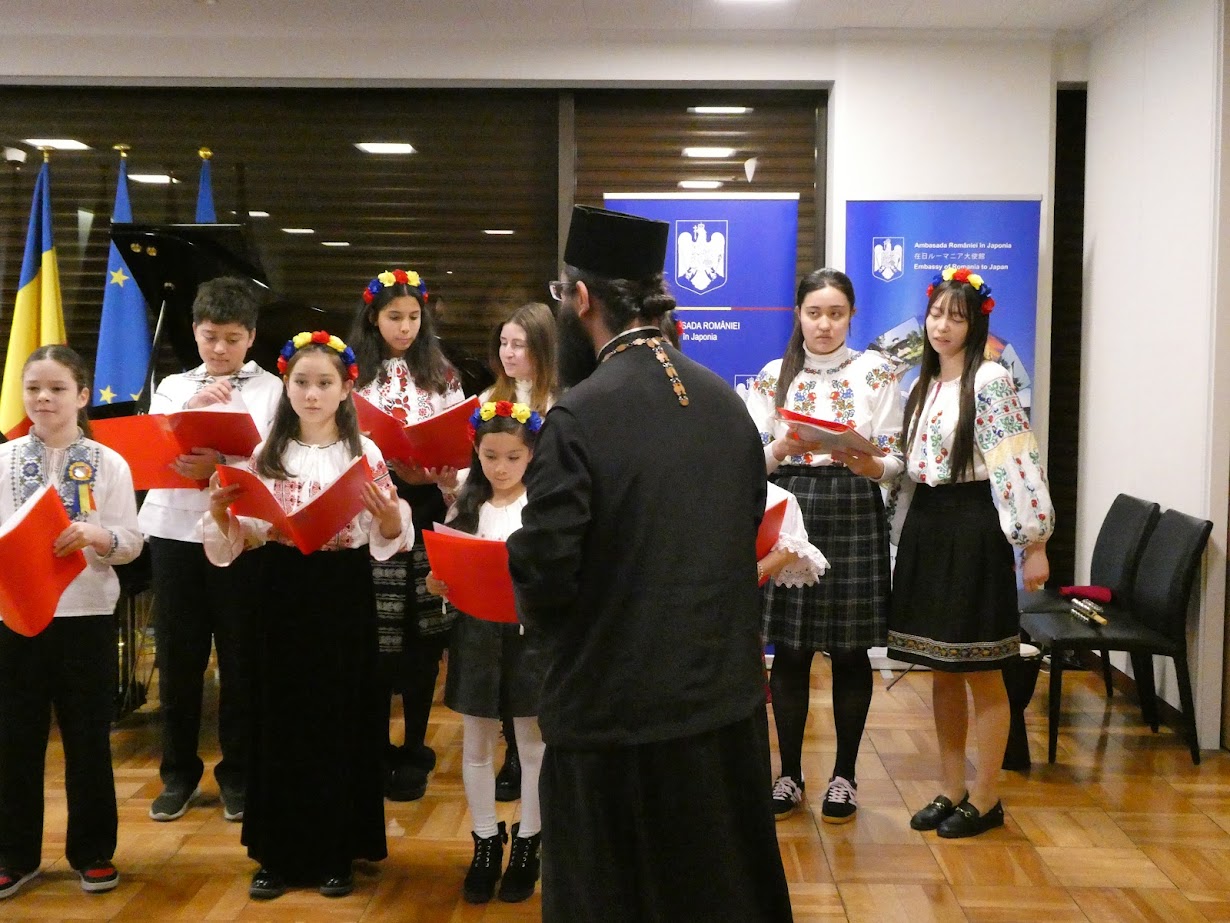
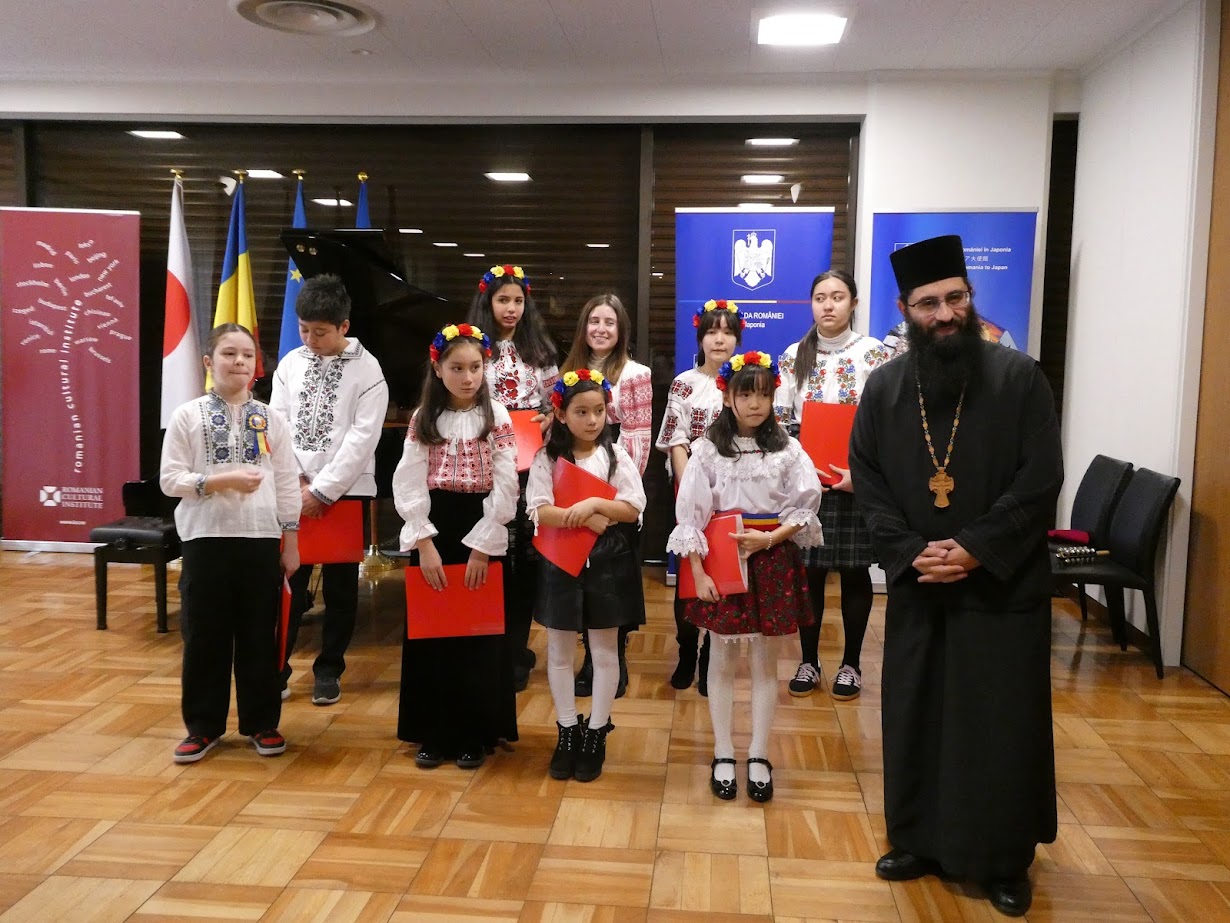
Every year, during Christmas, the Embassy invites a children’s choir from the Romanian Orthodox Church in Tokyo to participate in a special Christmas event. In 2025, the event was organized on the 19th of December.
The choir is organized by the Romanian Orthodox Church in Kunitachi City, Tokyo. While Romania does not have a state religion, approximately 80% of the population has long adhered to the Orthodox Church.
The path to the opening of the Romanian Orthodox Church in Tokyo was a long and difficult one. In 2013, Father Daniel Colliu, the current Representative of the Romanian Patriarchate in Japan, visited Japan. However, at the time, the Orthodox church services were held in a separate Catholic church. Funding was subsequently provided through the Romanian Patriarchate, the Romanian government, and the Romanian Orthodox community. Thanks to these efforts, the first Romanian Orthodox Church in Japan opened in March 2017. In August 2020, after approximately four years of review, the Romanian Orthodox Church in Japan was recognized as a religious corporation by the Japanese government.
Today, many Romanians attend this Romanian Orthodox Church. The Romanian ambassador and embassy staff frequently visit the church, and it is said to be particularly popular with Romanian women married to Japanese people. Many of these women have lived in Japan for many years, speak fluent Japanese, and are already integrated into Japanese society.
While this church serves as a spiritual refuge , it also plays a major role in teaching Romanian culture to children of Romanian descent born in Japan.
This church teaches children about traditional Romanian culture, ceremonies, and prayers, and the children have the opportunity to join the choir and sing traditional Romanian songs.
It was a wonderful moment, soothed by the clear singing voices of the children dressed in traditional Romanian costumes with intricate embroidery.

Read more: