Dolly Parton: A Partyline Memory
Dolly Parton, one of the most beloved and singular voices in American music, died peacefully at her home in Nashville on 25 August 2026, at the age of 80. Across seven decades she gave the world Jolene, Coat of Many Colors, 9 to 5 and I Will Always Love You, sold more than 100 million records, built Dollywood, and through her Imagination Library put hundreds of millions of books into the hands of children around the world.
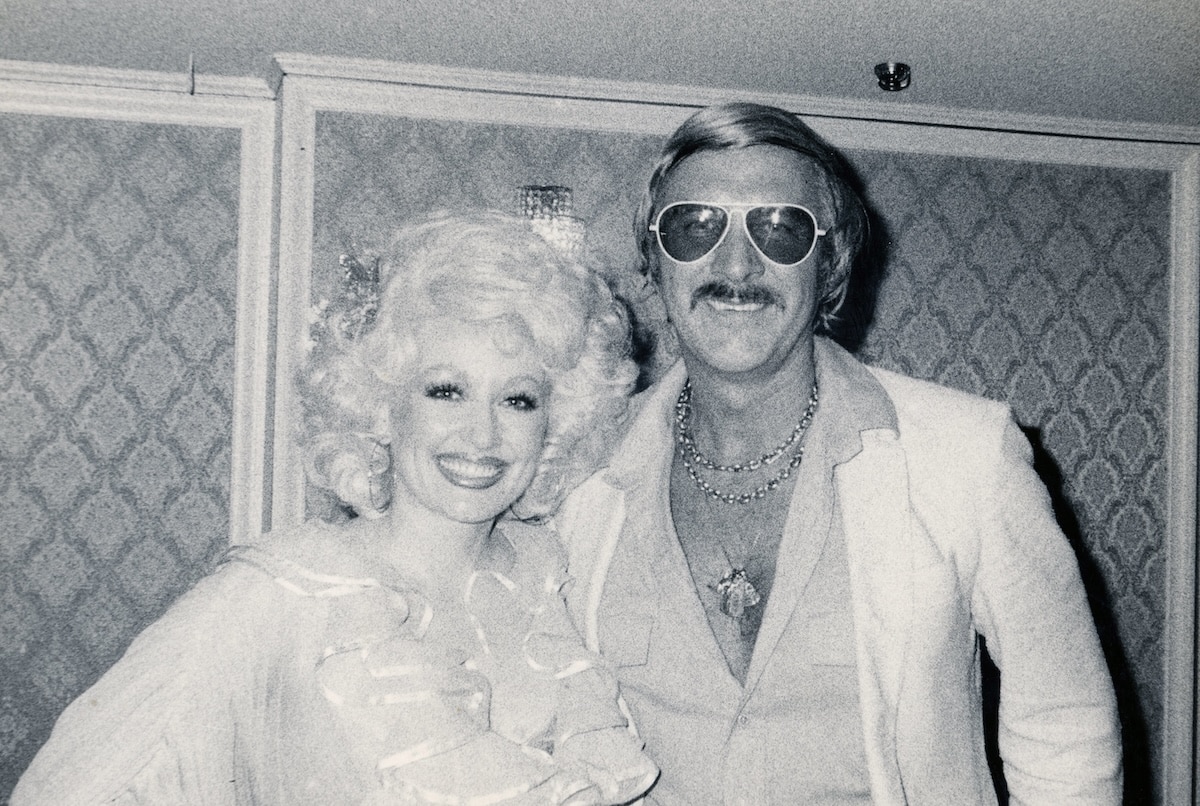
Long before any of that had reached this scale, Bill Hersey met her in Tokyo. From the Partyline archive, this is how he saw her.
From the Partyline: The Day I Said “Hello Dolly”
By Bill Hersey
Back when I had a mustache, friends over at the Stars and Stripes US military newspaper gave me the opportunity to meet and say “Hello Dolly” to one of Country and Western’s music greats. I’m talking, of course, about all-around entertainer Dolly Parton.
Talk about a rags-to-riches story. Dolly was the fourth of 12 children. In her own words, her family was dirt poor, and lived in a one-room cabin in the Great Smoky Mountains of Tennessee. She grew up with mostly spiritual music at home, started performing on TV when she was nine, and appeared at the Grand Ole Opry in Nashville, Tennessee, when she was 13.
Her initial success came as a songwriter, but with her looks, talent and personality, she fast became one of the most recognisable singer/songwriters in country music. One of her biggest hits was in 1974 — I Will Always Love You. She turned down Elvis Presley’s manager Col. Tom Parker’s offer for Elvis to sing the song if Dolly gave them half the publishing rights. It was her answer “no way” that gave her the title “The Iron Butterfly” in showbiz. Later, she claimed to have made over £6 million from Whitney Houston’s version of the song.
Dolly branched out from country and western and was successful as a pop singer and a film star (9 to 5, Rhinestone, and others). Dolly, just 157cm, likes to brag about her 40-inch bust line, and when asked about plastic surgery, says, “It takes a lot of money to look this cheap.” I recently saw her on a British TV interview. When asked if she had any interest in running for president she said, “No thanks, we’ve got enough boobs in the White House.”
Doesn’t seem fame and fortune has changed the lady at all. When I first met her many years ago she was everything you would want her to be — humble, fun, and so nice to everyone. Her infectious laugh was loud and genuine, and if you weren’t already her fan, you were a few minutes after you talked with her.
It wasn’t so easy for her here in Japan. Country and western wasn’t, and isn’t, that big here. I had the privilege of being backstage at the small venue where she played, which had a lot of empty seats. I also felt the promoter here did her an injustice by having two young Japanese guys — one on a guitar, one on a mouth organ — open for her. Happy to see that she was a real star that night though, and went all out to give her fans her best.
A Japanese-Filipino artist friend of mine, Wes, had hand-painted a happi coat for Dolly, and was able to meet her backstage. He handed her the present and started to leave. “Hey honey, you’re not going any place until I put this on, and we have our picture taken together,” she told him. You can imagine how happy that made him. Wes, by the way, has a big house in Honolulu now, and his paintings sell for $100,000 and up.
On the business side, Dolly has a theme park called Dollywood in Tennessee, and a dinner attraction called Dolly Parton’s Dixie Stampede. She also owns a film and TV production company, and has worked with Tokyo friends Kaz and Fran Kuzui on the Buffy the Vampire Slayer hit series.
All I’ve mentioned, plus concerts and the rest, have made Dolly the most honoured female country performer of all time — and fame, success and money have not spoiled her. She’s involved in far too many philanthropic efforts to mention here. She hasn’t forgotten her childhood, and many of her projects are set up to “help those back home where I grew up.”
I can’t tell you how lucky I feel to have met this truly great human being.
Bill Hersey’s Partyline column has chronicled Tokyo’s international community since the 1970s. More from the archive on hersey.jp.