“The Maeda: Legacy of a Prosperous Samurai Family” – A Magnificent Exhibition Commemorating the 100th Anniversary of the Maeda Ikutokukai Foundation
The Maeda family of the Kaga Domain—whose first lord was Maeda Toshiie, a master of the spear known as “Yari no Matasuke,” and currently featured in the NHK historical drama “Toyotomi Brothers”—is known for laying its foundation during the Sengoku period and for flourishing a magnificent culture during the Edo period.
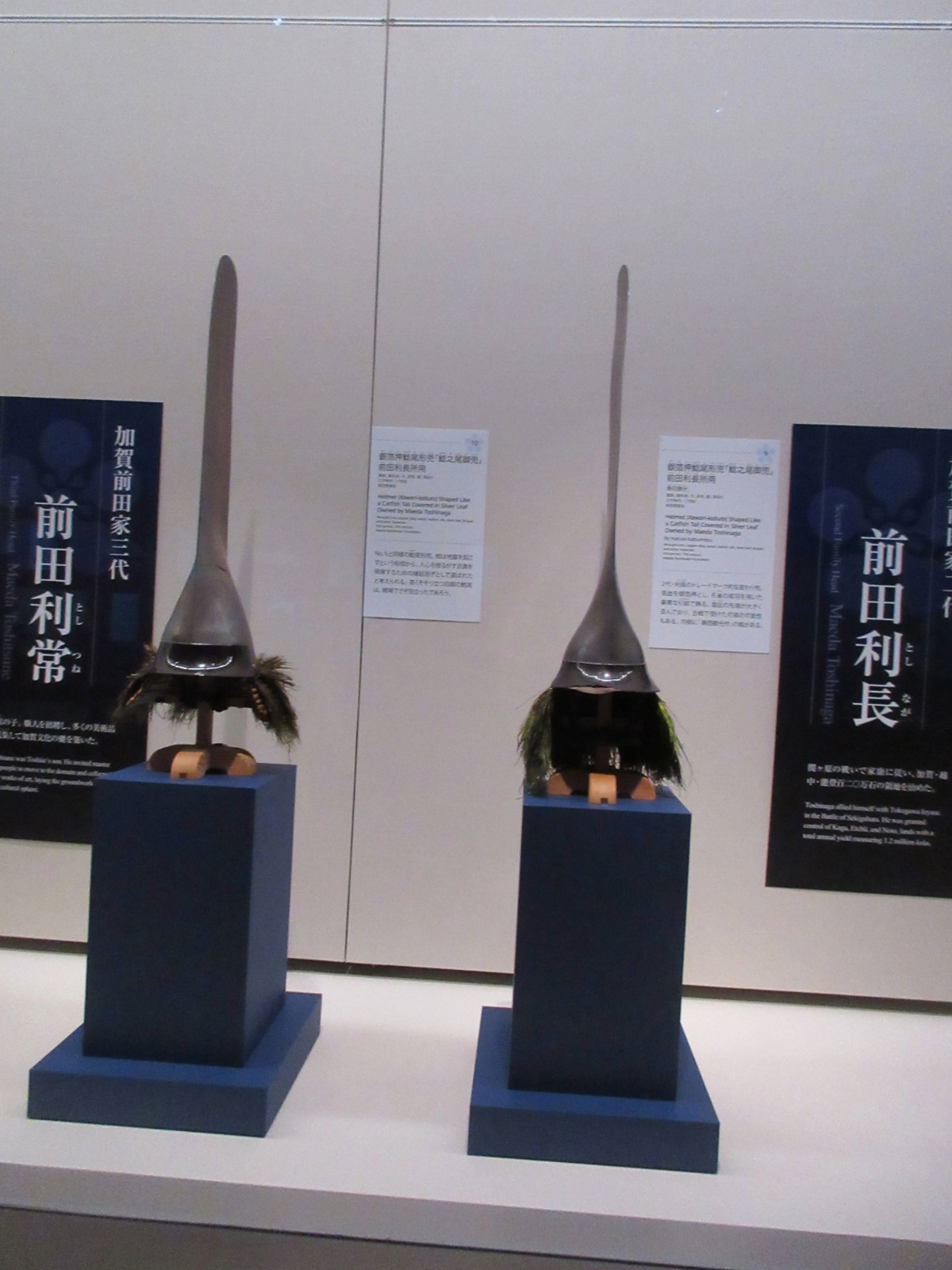
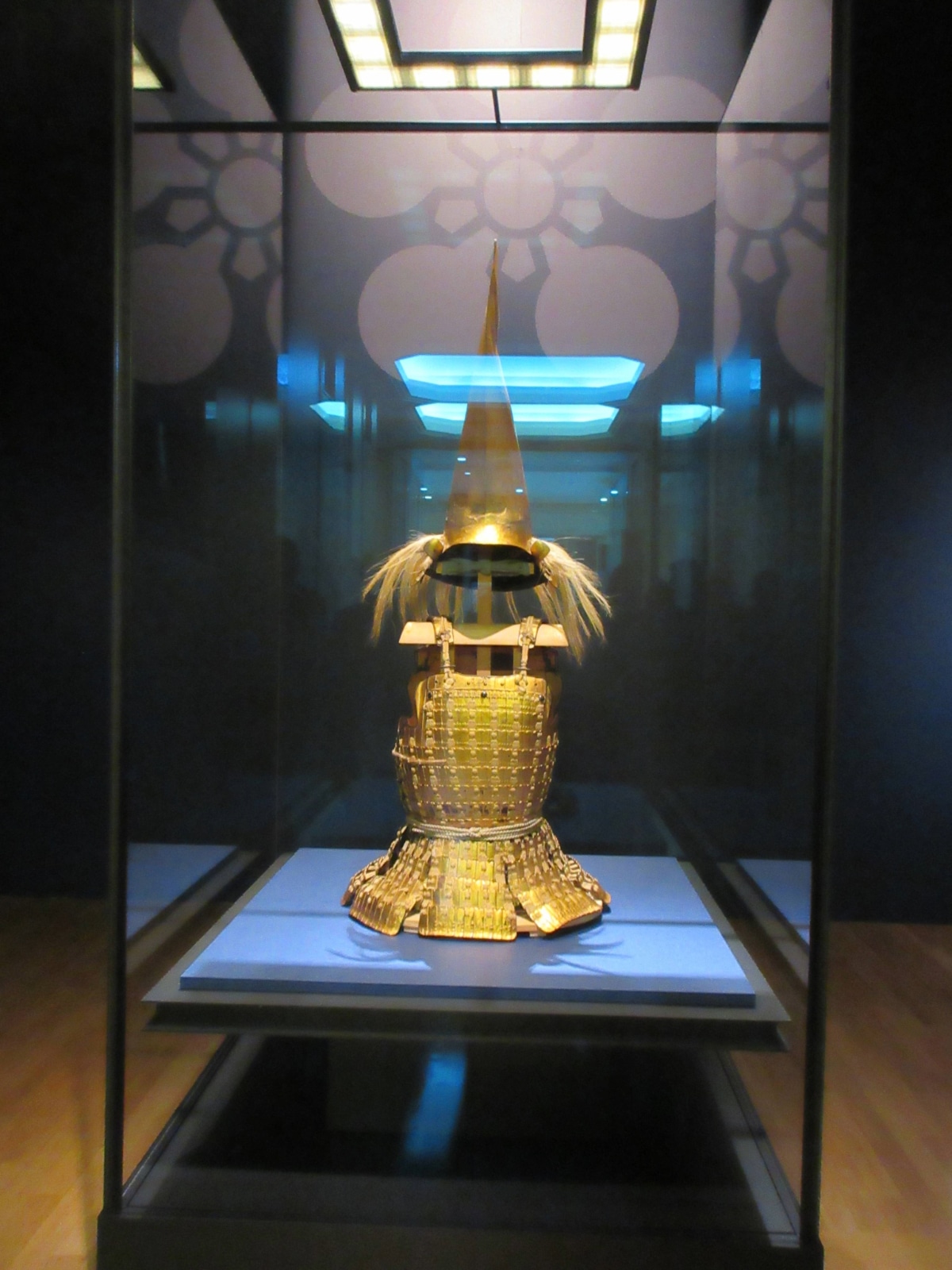
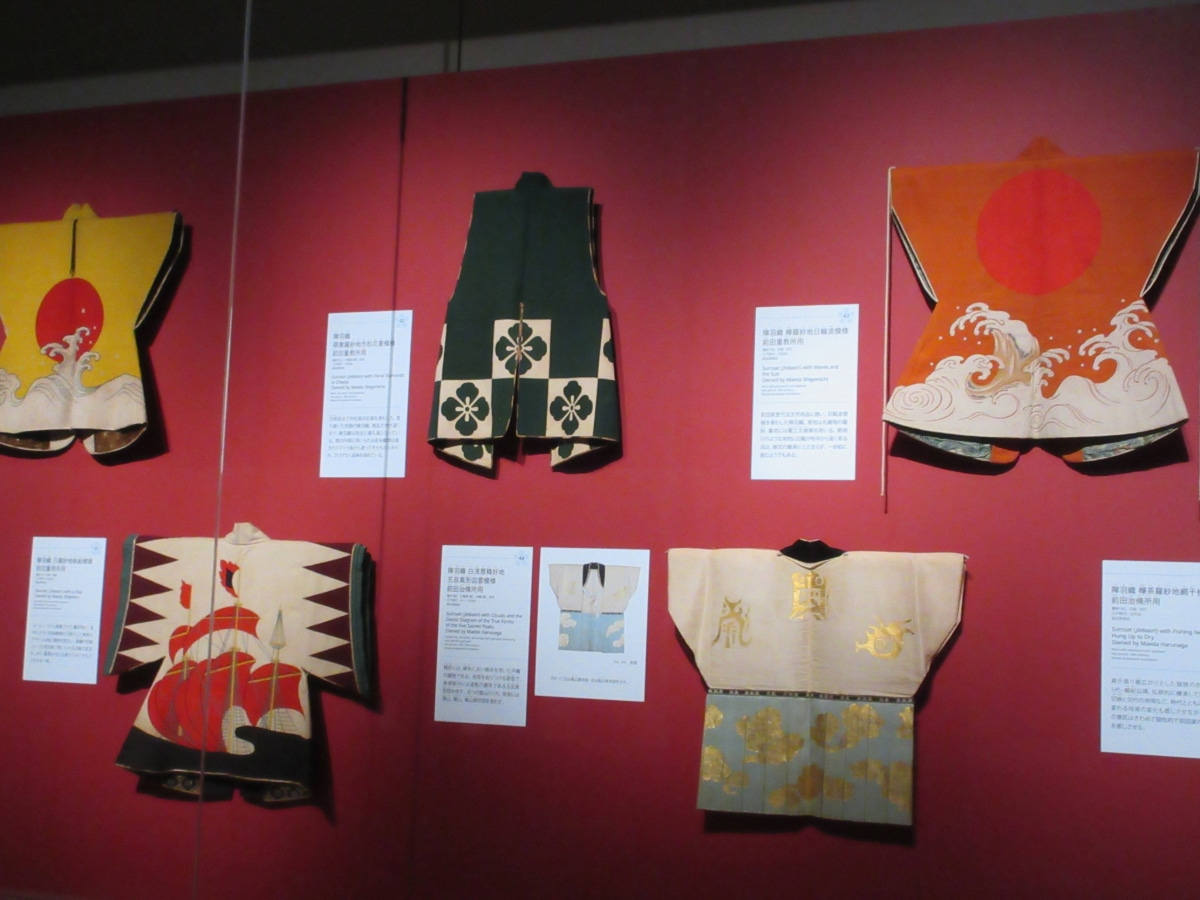
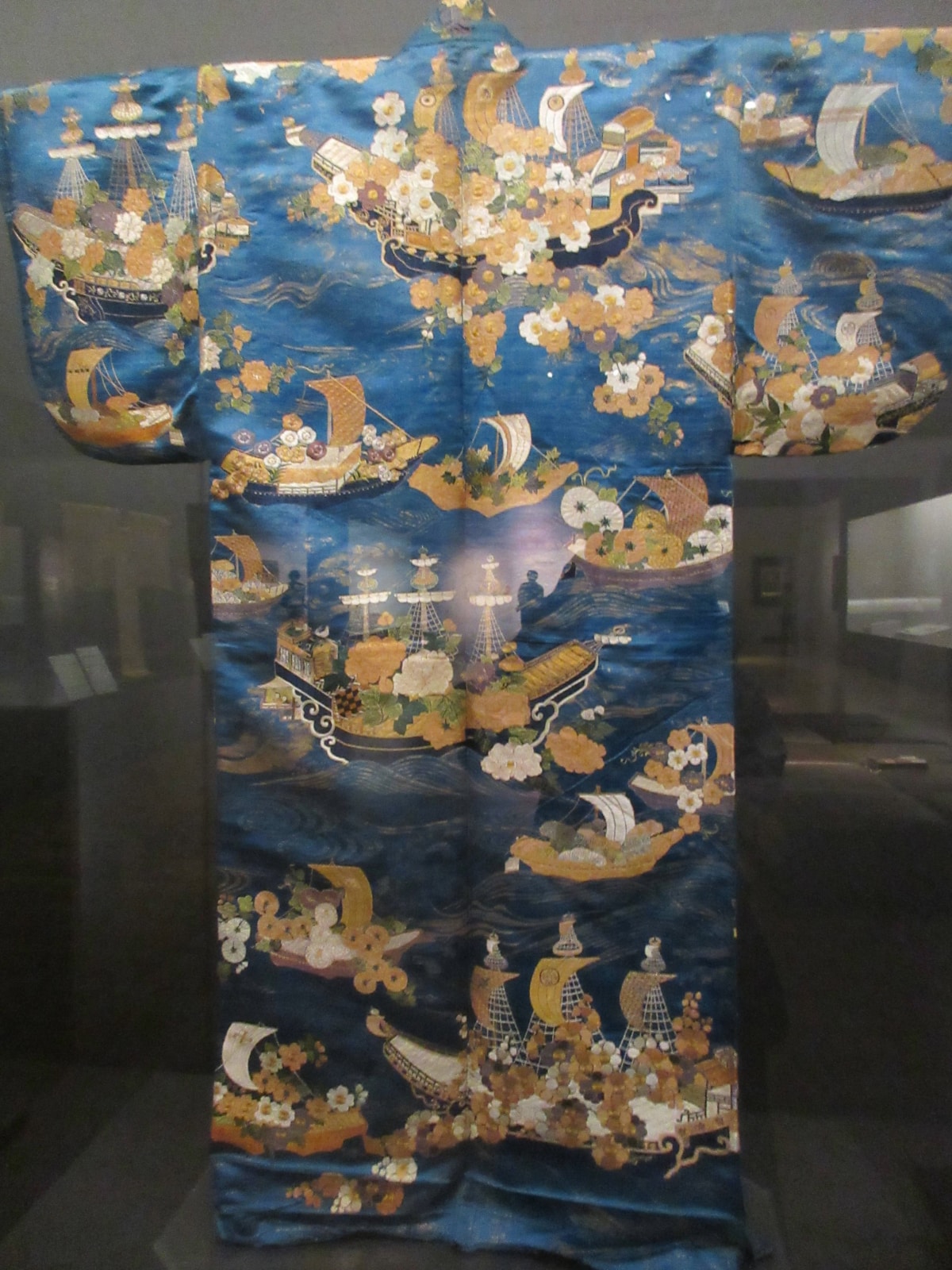
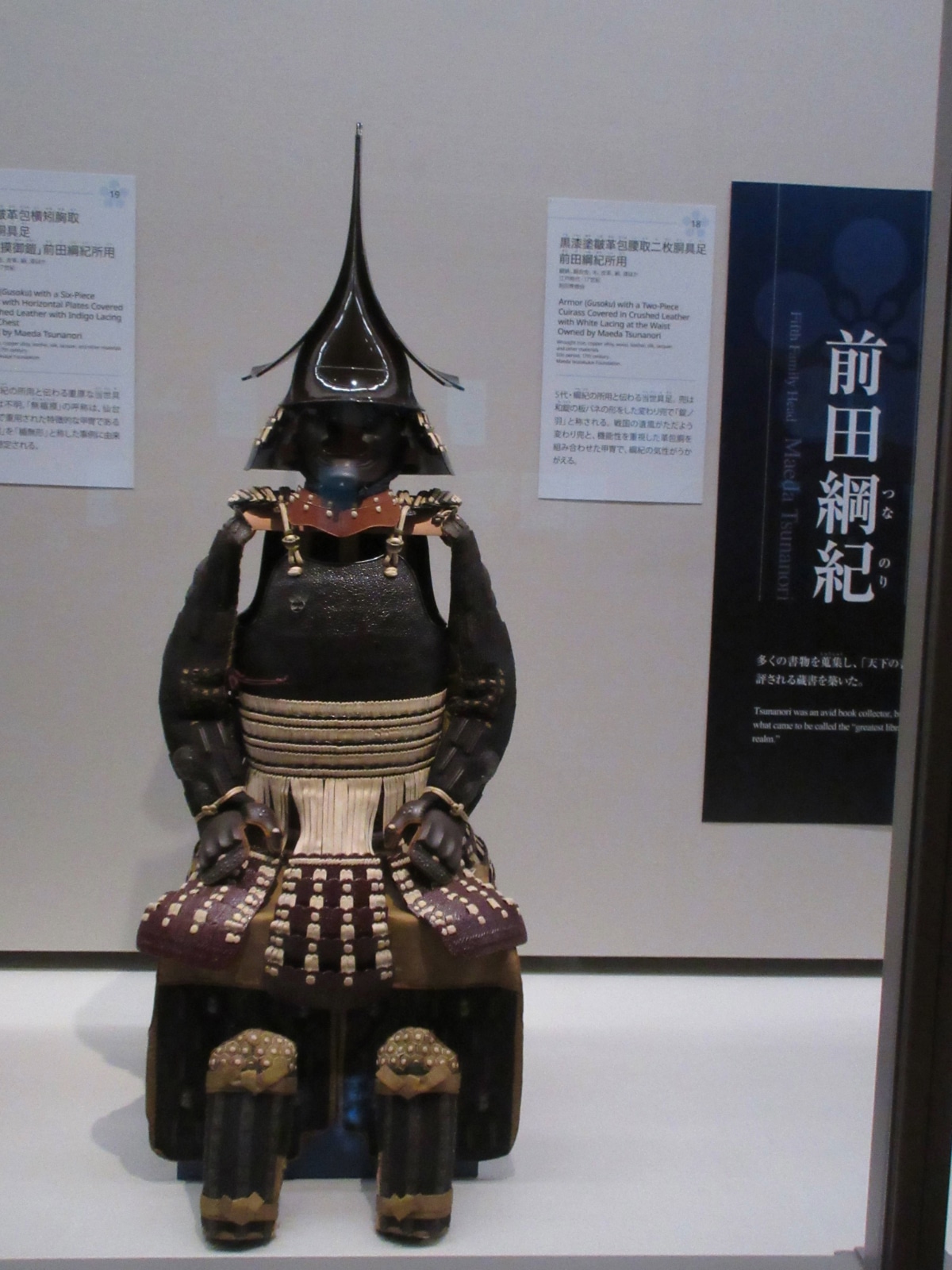
Upon entering the exhibition, one is immediately overwhelmed by the splendor of the helmet of Maeda Toshiie, a brave and fearless Sengoku warrior, and the armor and battle surcoats worn by successive lords of the Kaga Domain. Most of the armor is preserved in such good condition that it seems unlikely it was actually worn in battle. And its design also suggests it was not used in actual combat. Each piece of armor possesses a refined aesthetic and is a work of art in itself. The jinbaori (warrior’s surcoat) was rare at the time, and it was made with many imported materials that must have been extremely expensive. One can even sense the ingenuity used to make the warrior look beautiful and brave on the battlefield. The bold patterns and three-dimensional silhouettes are very innovative, and it is undoubtedly a fashionable cultural heritage that resonates even today.
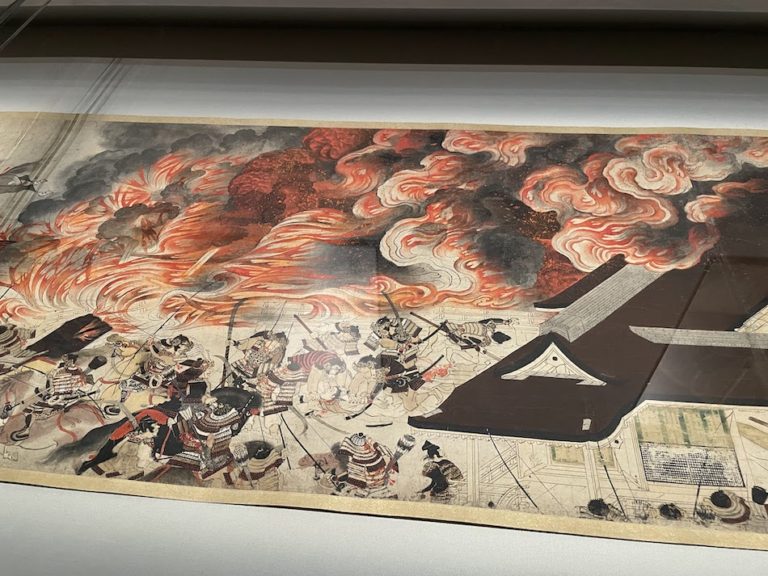
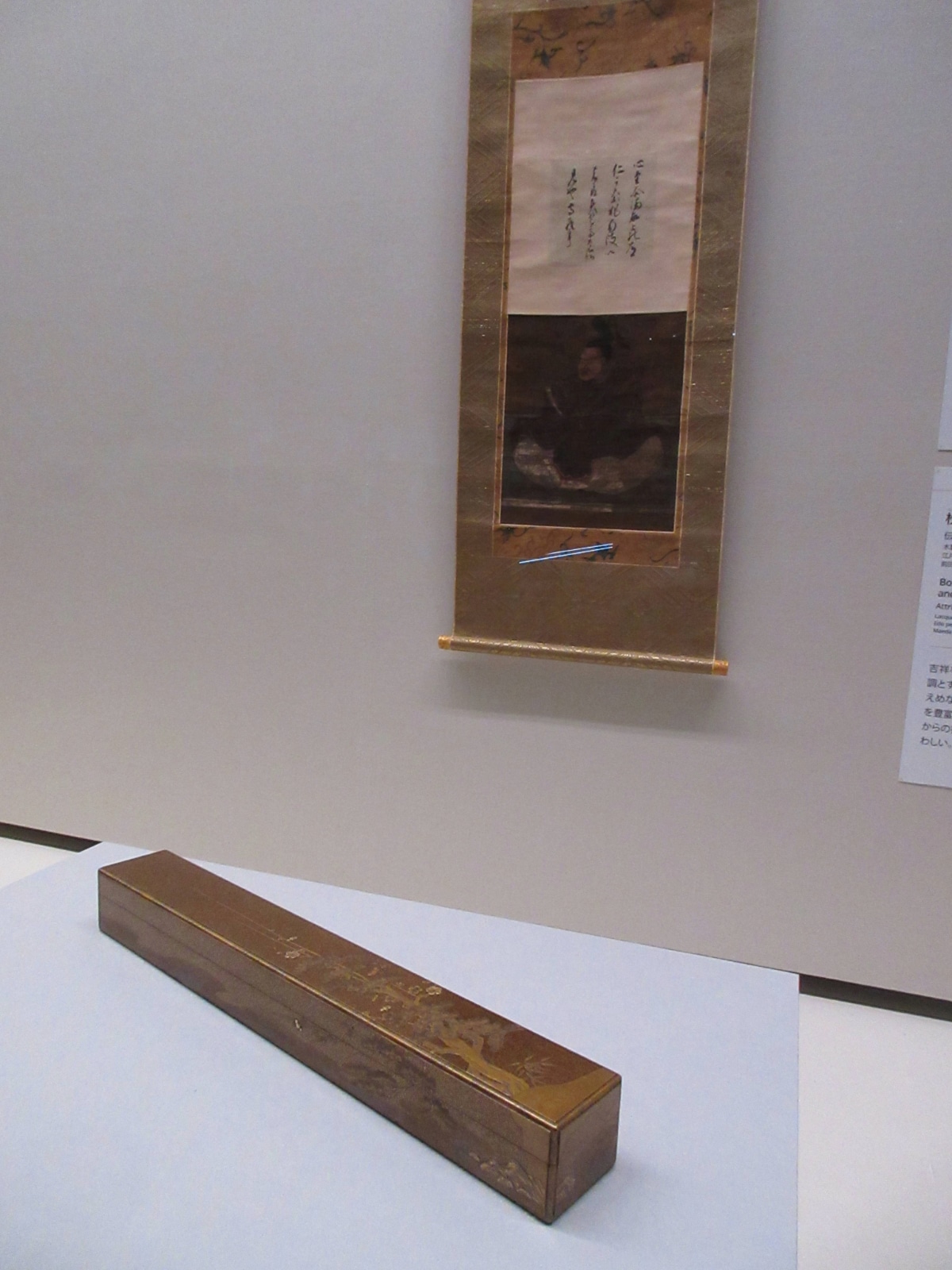
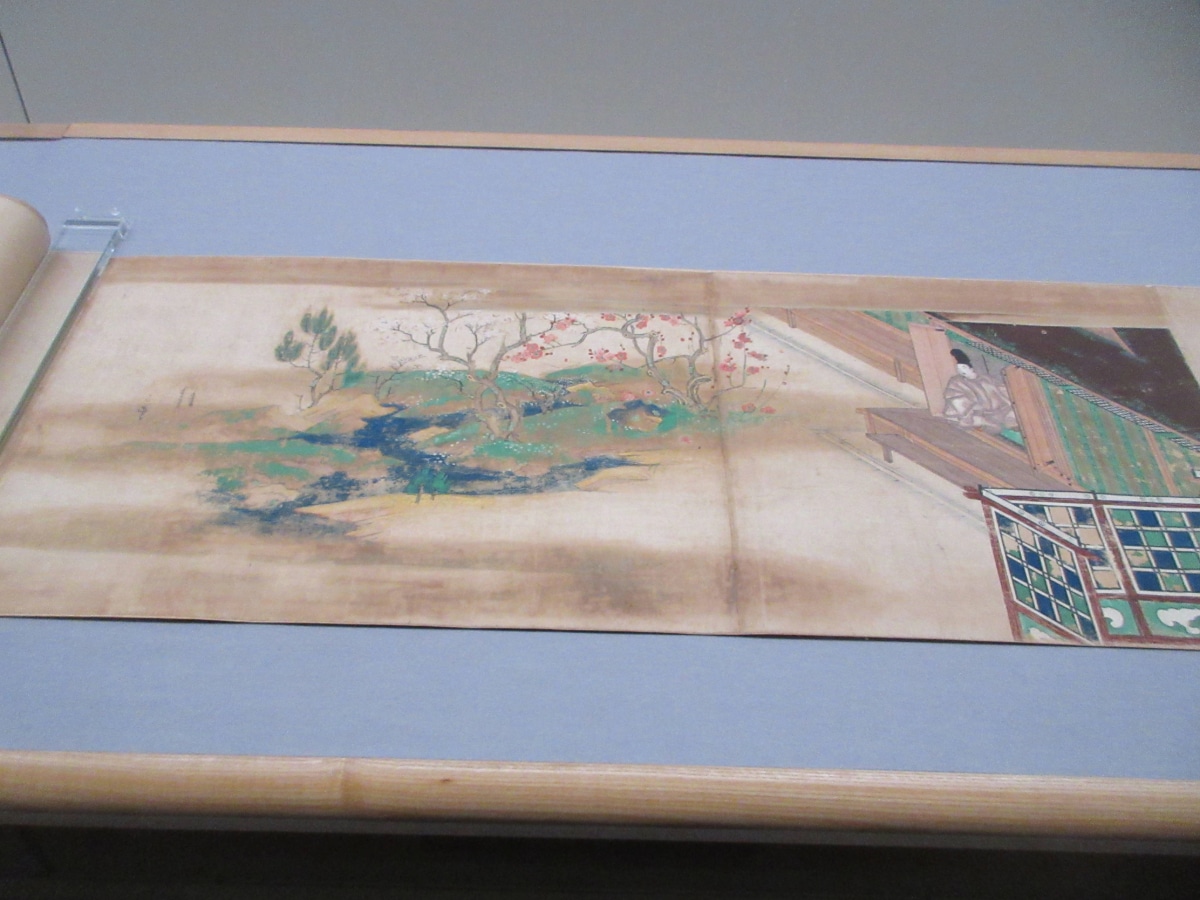
What is noteworthy about the picture scrolls and hanging scrolls is the Maeda family’s great importance on Tenjin worship (originating from the deification of Sugawara no Michizane). This is evident in the fact that the Maeda family adopted the Sugawara surname, claiming descent from Sugawara-no-Michizane. The Maeda Ikutokukai Foundation reportedly possesses 65 works related to Sugawara-no-Michizane, and this exhibition includes the Egara Tenjin Emaki (picture scroll of Egara Tenjin) and a portrait of Tenjin in which Sugawara-no-Michizane’s anger can be seen in his facial expression. The Egara Tenjin Emaki depicts the plum blossoms mentioned in the waka poem composed by Sugawara-no-Michizane: “When the east wind blows, send forth your fragrance, plum blossoms; do not forget spring, even though your master is gone.” Standing before it, one is reminded of the legend, “Is this the plum tree that followed Michizane all the way to Dazaifu?” Furthermore, the Tenjin image depicting the enraged Michizane is accompanied by a waka poem written by Emperor Go-Mizunoo, and the pine, bamboo, and plum lacquer box containing it features beautifully crafted plum blossoms, a symbol of Michizane.
This exhibition also showcases some truly remarkable collections. One example is the collection of Maeda Tsunanori, the fourth head of the family, who was known for his scholarly nature and love of learning. Having inherited the family headship at the young age of three due to his father’s early death, Tsunanori not only encouraged learning but also established a book commissioner to collect and compile numerous examples of crafts and ancient books, creating the “Hyakko Hisho” (Hundred Craftsmen’s Comparison). He also dedicated himself to collecting and preserving ancient documents, including the Toji Hyakugo Monjo (Hundred Documents of Toji Temple). This exhibition features a selection of the finest works from a vast collection of ancient documents, including Sugawara-no-Teika’s travelogue of Kino Tsurayuki, “Tosa Nikki” (The Tosa Diary).
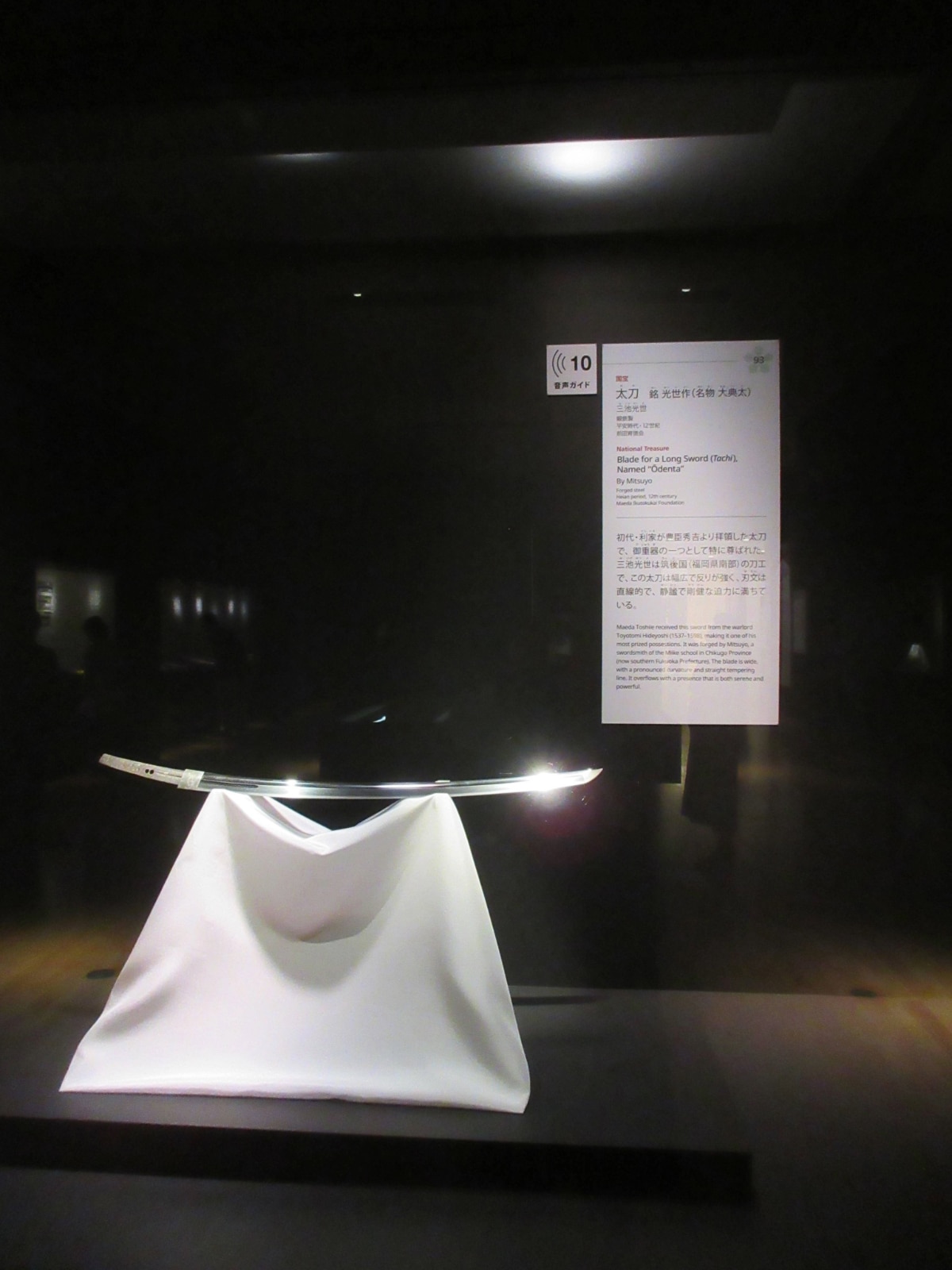
As befits an art collection by a samurai family, the swords and daggers, displayed alongside the armor, were particularly magnificent. Even those who aren’t sword enthusiasts will be captivated by the mystical glow of the national treasure, Mitsuyo’s famous sword, “Oodenta.” This Oodenta was the most treasured sword passed down through the Maeda family, and from the Edo period onward, it became the sword protecting the family head and his relatives.
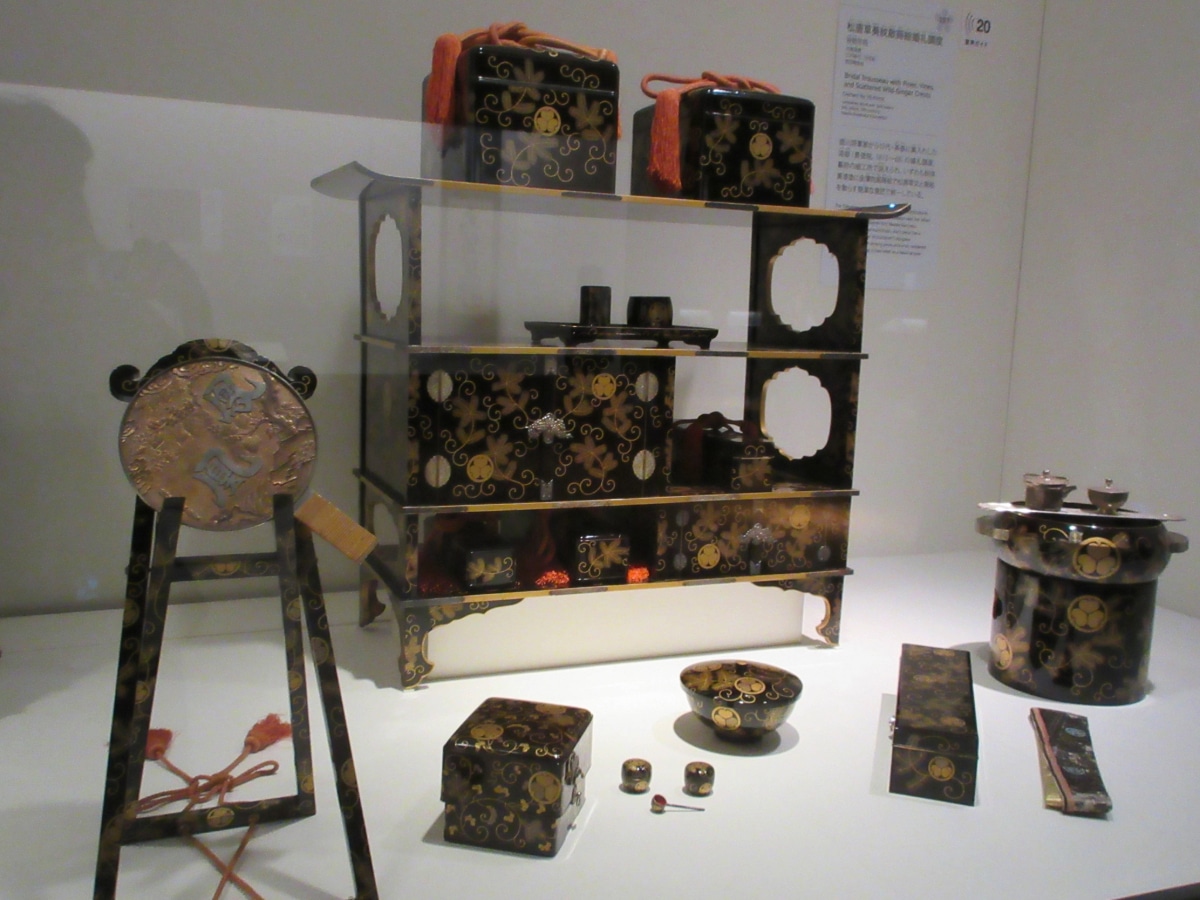
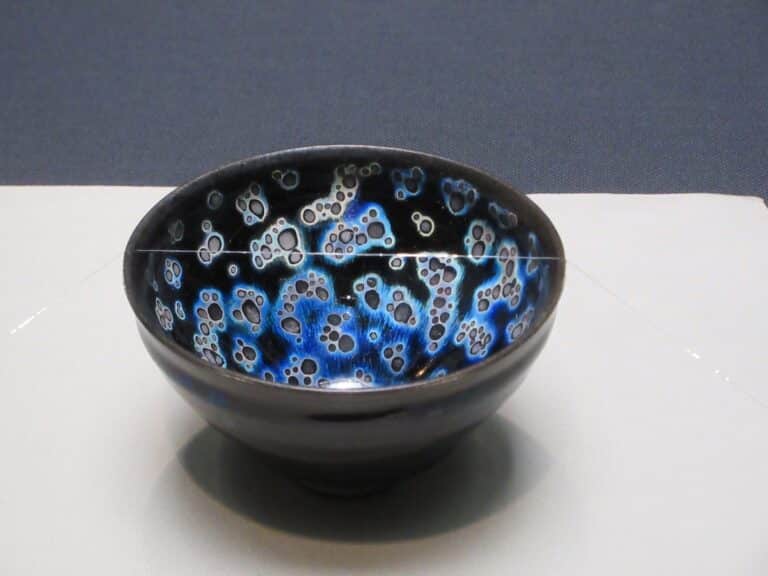
Even just viewing these items, one is overwhelmed by the continuous display of national treasures and important cultural properties, but the world of tea ceremony as practiced by the Maeda family is truly breathtaking. An extremely valuable Yohen Tenmoku tea bowl was also preserved by the Maeda family, and it is said that the Yohen Tenmoku currently housed in the Nezu Museum in Tokyo was also listed in the Maeda family’s inventory. Alongside the Yohen Tenmoku tea bowls, other beautiful tea utensils include numerous tea bowls and tea caddies imported from the continent, such as the Baika Tenmoku.
The final chapter of this exhibition showcases the collection of the Maeda family, who became a marquis family after the Meiji Restoration. Particularly impressive here are the numerous autographs collected by Marquis Maeda Toshinari. While serving as a military attaché at the Japanese Embassy in London, Marquis Toshinari reportedly collected furnishings and works of art to adorn his residence in Komaba, Tokyo in his spare time.
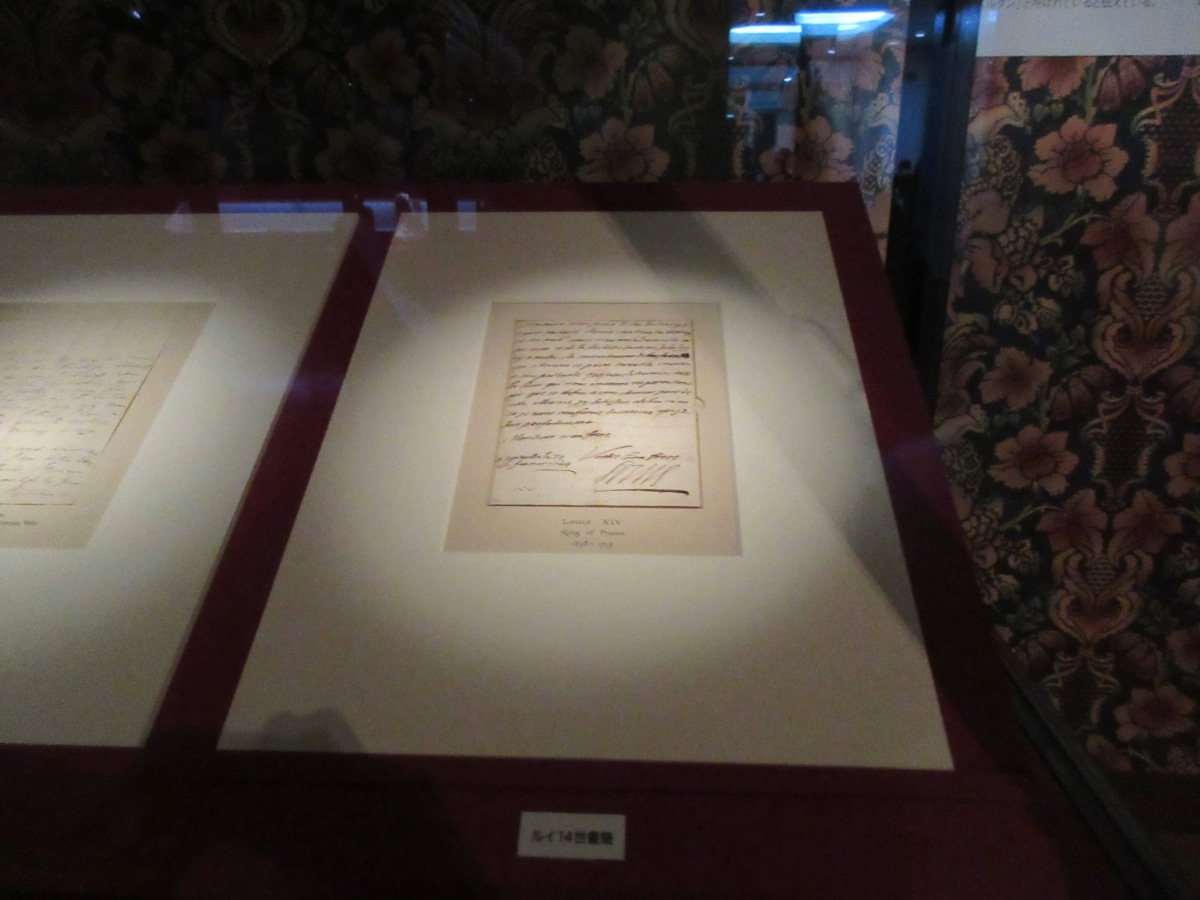
Among these, he devoted the most effort to collecting autographs of famous figures from throughout history in Europe and America. The autographs collected by Marquis Toshinari include those of monarchs such as Cromwell, Lincoln, and Napoleon I, as well as military figures, politicians, cultural figures, scientists, musicians, painters, and actors. While the majority are letters, examining their handwriting offers a glimpse into their character and personality.
The excellent collecting habit inherited from his ancestor, Tsunanori, the fourth head of the family who collected ancient documents, bore fruit during Marquis Toshinari’s time.
The “Maeda Ikutokukai Foundation 100th Anniversary Special Exhibition: One Million Koku! The Kaga Maeda Family,” featuring numerous national treasures and important cultural properties, far exceeded expectations and was a truly magnificent and worthwhile exhibition.