Learn Authentic Tunisian Cuisine – Cooking Class Hosted by Madam Rym, the Spouse of the Tunisian Ambassador to Japan
This year marks the 70th anniversary of diplomatic relations between Tunisia and Japan. On March 20, 1956, Tunisia, formerly a French colony, gained independence as the Kingdom of Tunisia, with Mohammed VIII al-Amin as King and Habib Bourguiba, who led the independence movement, as Prime Minister. This was a peaceful independence from its colonial power, France, without war. Immediately afterward, on June 26, Japan recognized Tunisia as a state, and the two countries established diplomatic relations. Although Tunisia later abolished its monarchy and transitioned to a republic, diplomatic relations with Japan remain excellent.
Tunisia, having hosted TICAD 8, holds a leading position in North Africa, driving the development of the entire continent. Blessed with beautiful land, it has been known as a tourist destination since ancient times, and its scenery is not only popular with tourists but also frequently used as a filming location for movies. It’s well-known worldwide that Hollywood films such as “Star Wars” and “The English Patient” were filmed in this region.
At last year’s Osaka World Expo, one of the most attention-grabbing pavilions was undoubtedly Tunisia. The pavilion, which displayed large traditional mosaics and symbolically represented Tunisian culture, attracted many visitors, with long que forming daily. Furthermore, the VIP room, constructed with traditional blue tiles, became a major topic of conversation not only among the general public but also among the media, architects, and art historians, with many art historians and architects visiting for educational purposes.
Among Tunisian culture, alongside architecture and tourism, cuisine is particularly noteworthy. Facing the Mediterranean Sea, Tunisia boasts abundant seafood, and its warm climate produces high-quality olive oil. The grapes are also of excellent quality, and in recent years, the country has become known for its fine wines. The cuisine, adorned with these abundant ingredients, continues to captivate many people, even those with discerning palates.
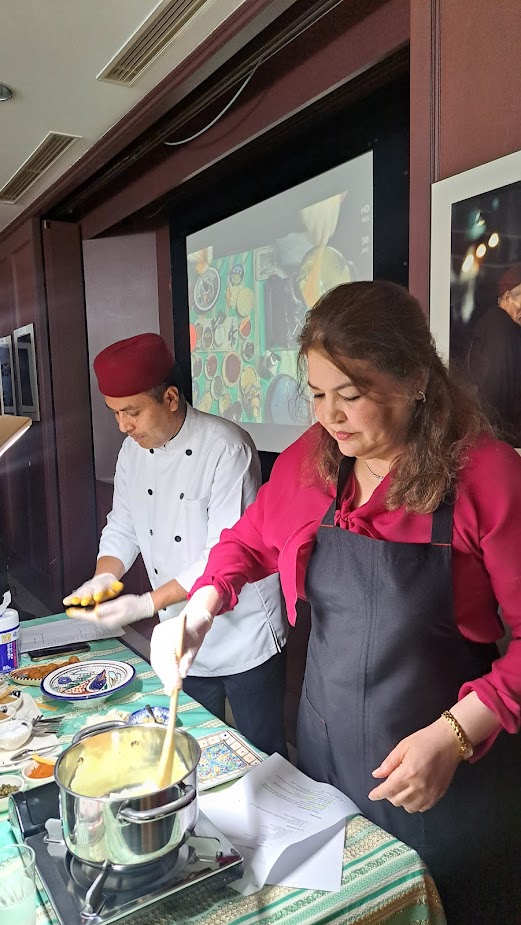
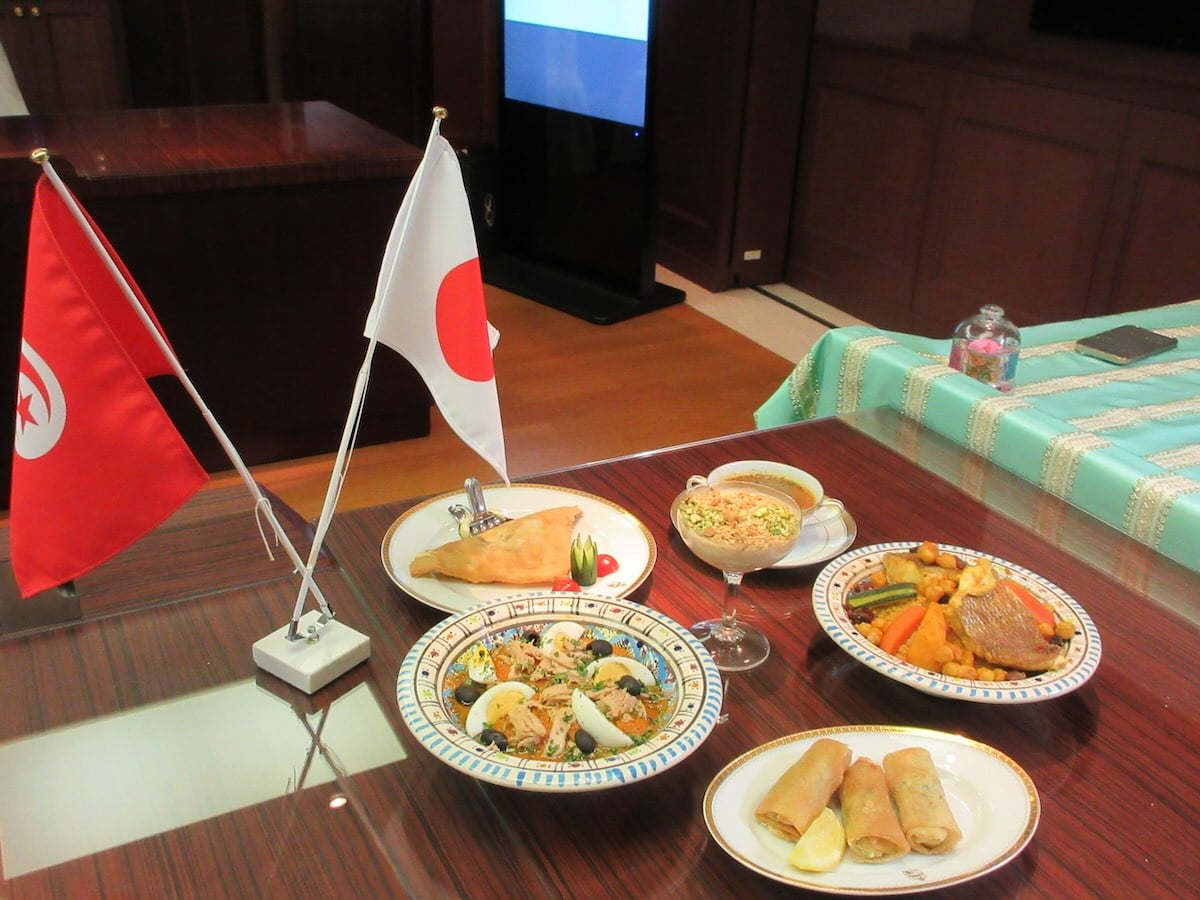
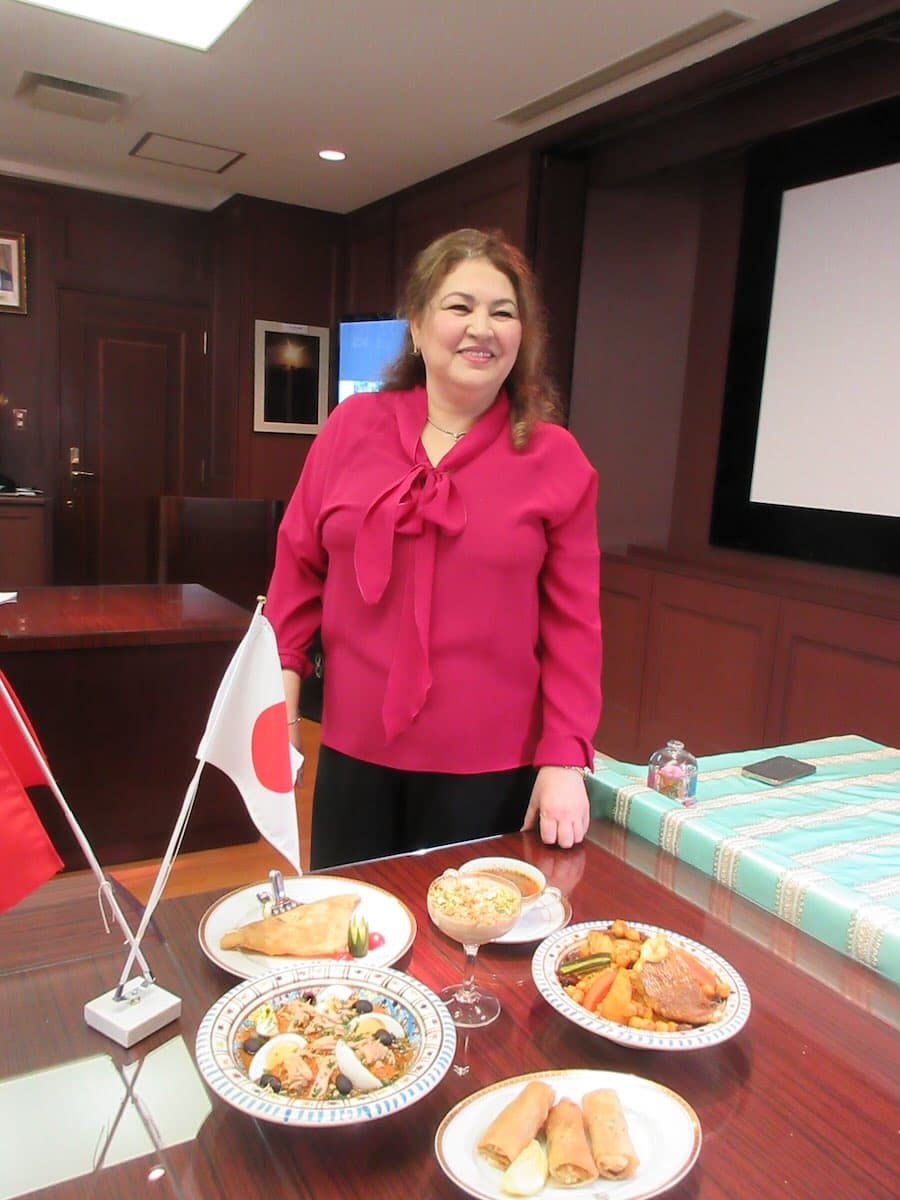
Many people have expressed a desire to learn Tunisian cuisine, and to meet this demand, Madam Rym Chafra, the spouse of the Ambassador Extraordinary and Plenipotentiary of Tunisia to Japan, recently held a Tunisian cooking class. Known for her culinary skills, Madam Rym carefully taught participants how to prepare representative Tunisian dishes using Tunisian seasonings such as harissa, which are readily available in Japan, and ingredients easily found in Japanese supermarkets. The variety, beauty, and deliciousness of the dishes, starting with a refreshing soup and progressing through salads, fried foods, couscous, and dessert, truly embodied the essence of Tunisian cuisine.
Perhaps the most important aspect of Madam Rym’s cooking class was the technique for steaming couscous. Couscous, often called the world’s smallest pasta, has become quite well-known in Japan. However, there’s a trick to steaming it properly. It’s not simply boiled like pasta; it requires several stages of steaming. Learning this technique was a significant benefit.
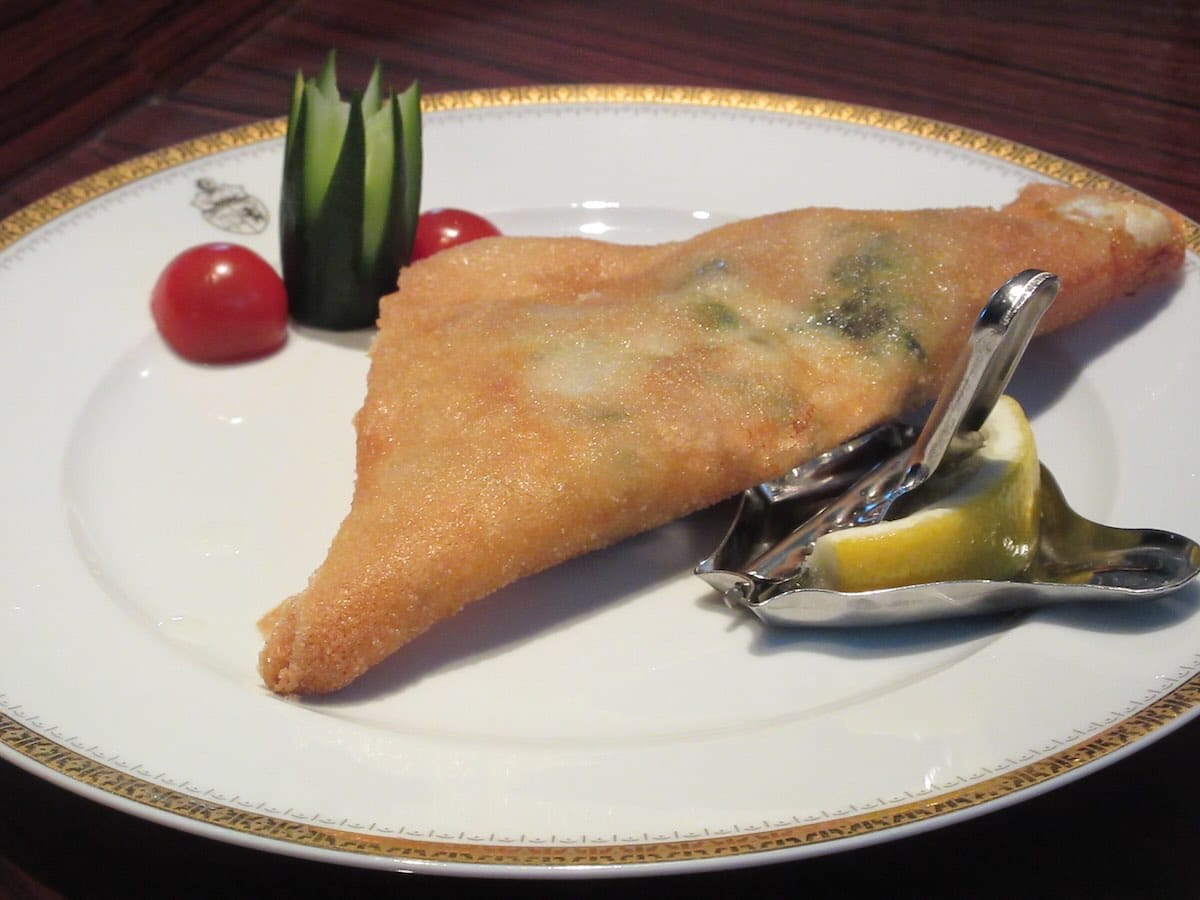
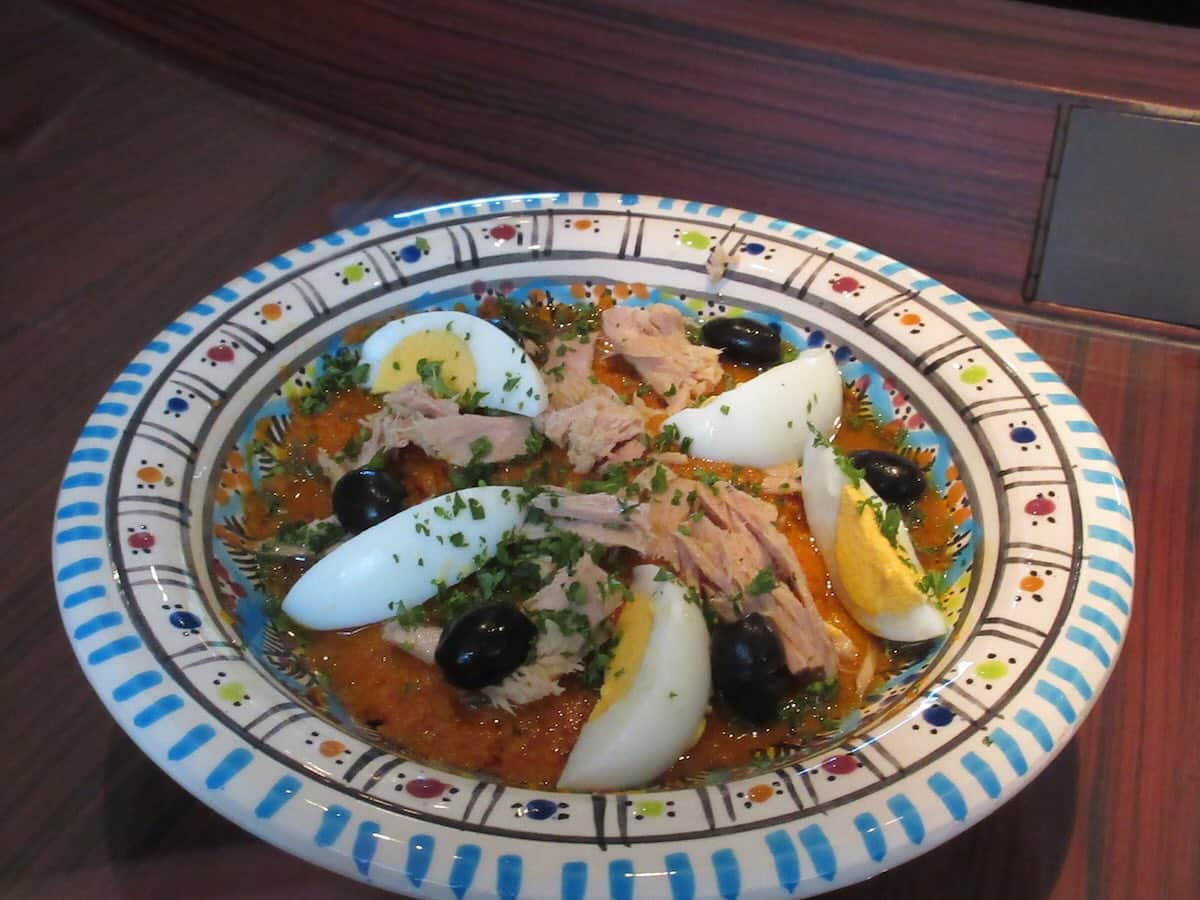
After the cooking class, everyone enjoyed authentic Tunisian cuisine supervised by Madam. Lym. The menu I learned from Madam Rym that day was as follows:
- Tunisian meatballs and semolina soup (Sudir)
- Carrot salad (Omek Furia)
- Fatma’s fingers (Brik)
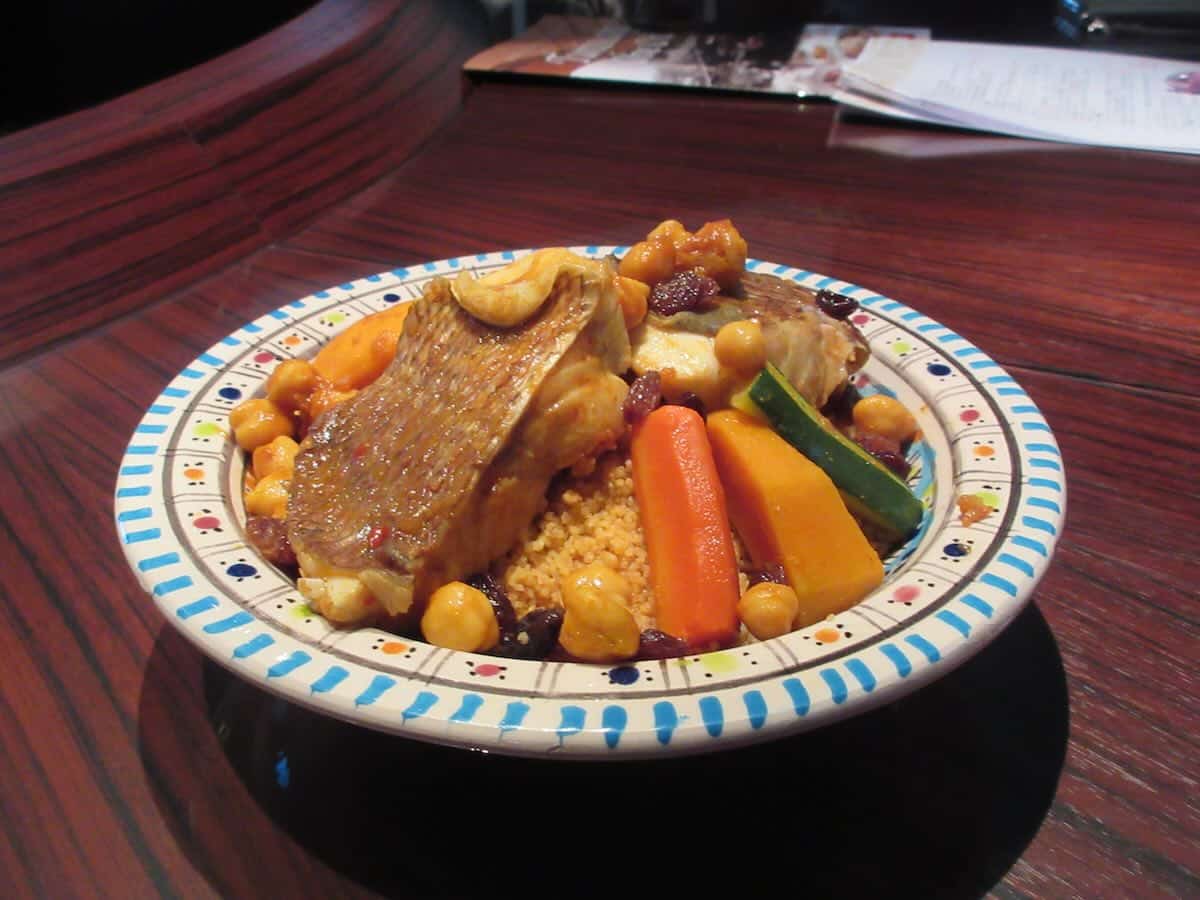
- Fish couscous
- Hazelnut cream dessert (Bouza)
Read also,