The Collector Chosen by Kyōsai, the “Demon Painter”: The Israel Goldman Collection Exhibition
Currently, the most popular painters are arguably Itō Jakuchū and Kawanabe Kyōsai.
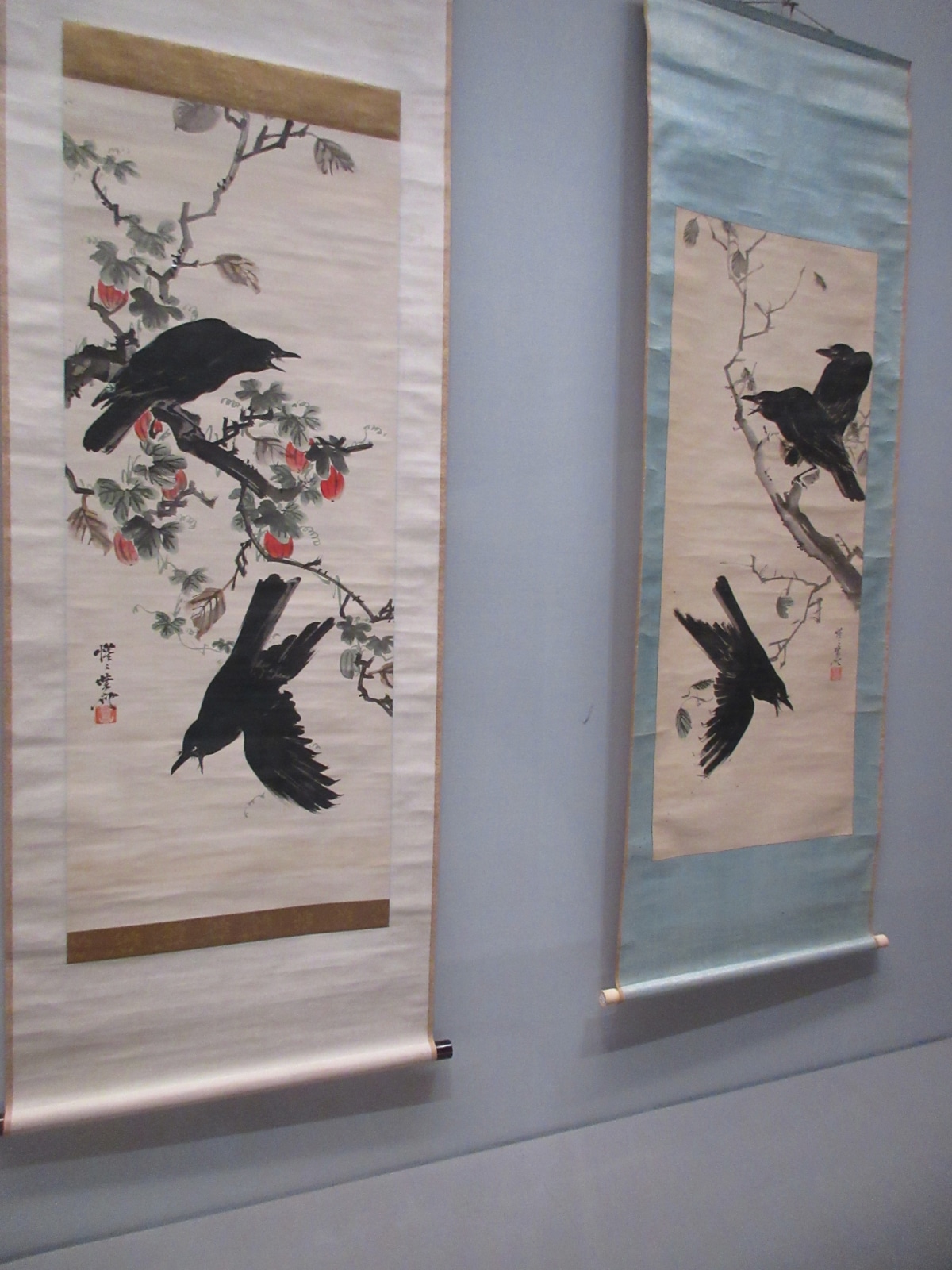
Kyōsai is known as a genius who was highly active from the end of the Edo period to the Meiji era. At the age of seven (by traditional Japanese reckoning), he became a disciple of Utagawa Kuniyoshi and began learning painting techniques. During this initial period of apprenticeship, the infamous severed head incident occurred, which is part of the Kyōsai legend. The young Shūzaburō (later Kyōsai) is said to have secretly sketched a human severed head he found in a river. Kyōsai’s world, where he wanted to sketch what he saw with his own eyes, was already showing glimpses of this early stage.
While Kyōsai was learning the techniques of ukiyo-e, his father, judging that Kuniyoshi’s conduct would not have a good influence on Shūzaburō (later Kyōsai), who was the age of a modern-day elementary school student, separated him from Kuniyoshi’s disciples and had him apprentice under a Kano school painter. It seems that Kuniyoshi and his disciples sometimes frequented the Yoshiwara pleasure district, and they may have taken the young Shuzaburo with them. Legends often surround geniuses in all aspects of their lives, and Kyōsai is no exception.
Kyōsai, who trained in the Kano school, is said to have perfected his technique at a very early age. It’s even said that he was only about 17 years old at that time.
Kyōsai was also extremely prolific. His talent is evident in his impromptu paintings. These paintings were created at banquets, and being a natural lover of alcohol, he enjoyed these occasions, often creating spontaneous paintings. Because he was often heavily intoxicated, his signatures are squiggly and illegible, but even the paintings he created at that time are incredibly brilliant! They seem to exclaim, “This is what genius is!”
However, one thing that plagues Kyōsai is the lack of a cohesive collection of his works. This is perhaps the biggest weakness of the prolific Kyōsai.
It is said that Kawanabe Kyōsai, at the time, asked Kashima Seibei, who was also his patron, to preserve his works for posterity. Kashima Seibei possessed many masterpieces by Kyōsai, including the “Journey Through Hell and Paradise,” considered one of Kyōsai’s most representative works. However, after Seibei’s death, due to the financial situation of his descendants, this collection was sold and scattered throughout the world. Furthermore, it is said that many works have lost their whereabouts.
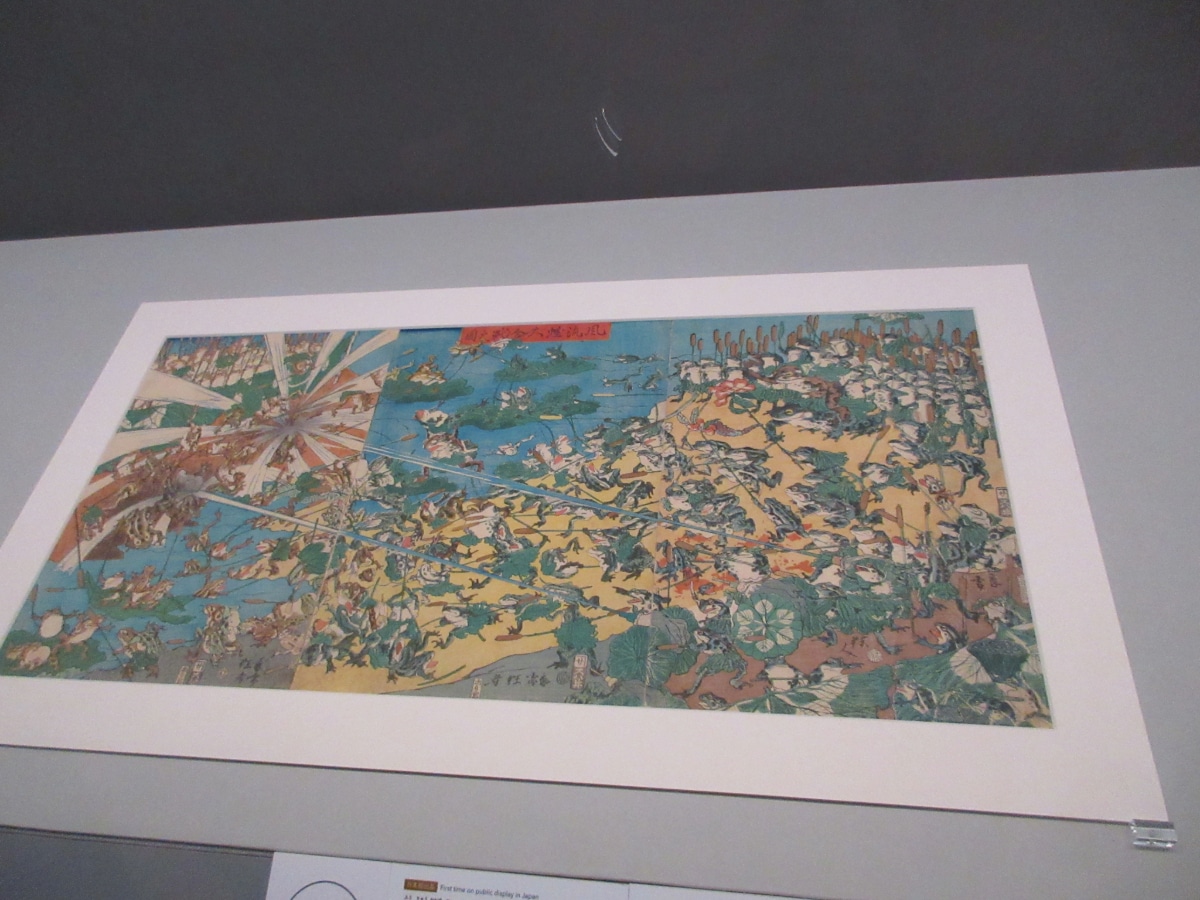
There is a collector who, over more than 40 years, has diligently collected Kyōsai’s works, building a vast collection: Israel Goldman.
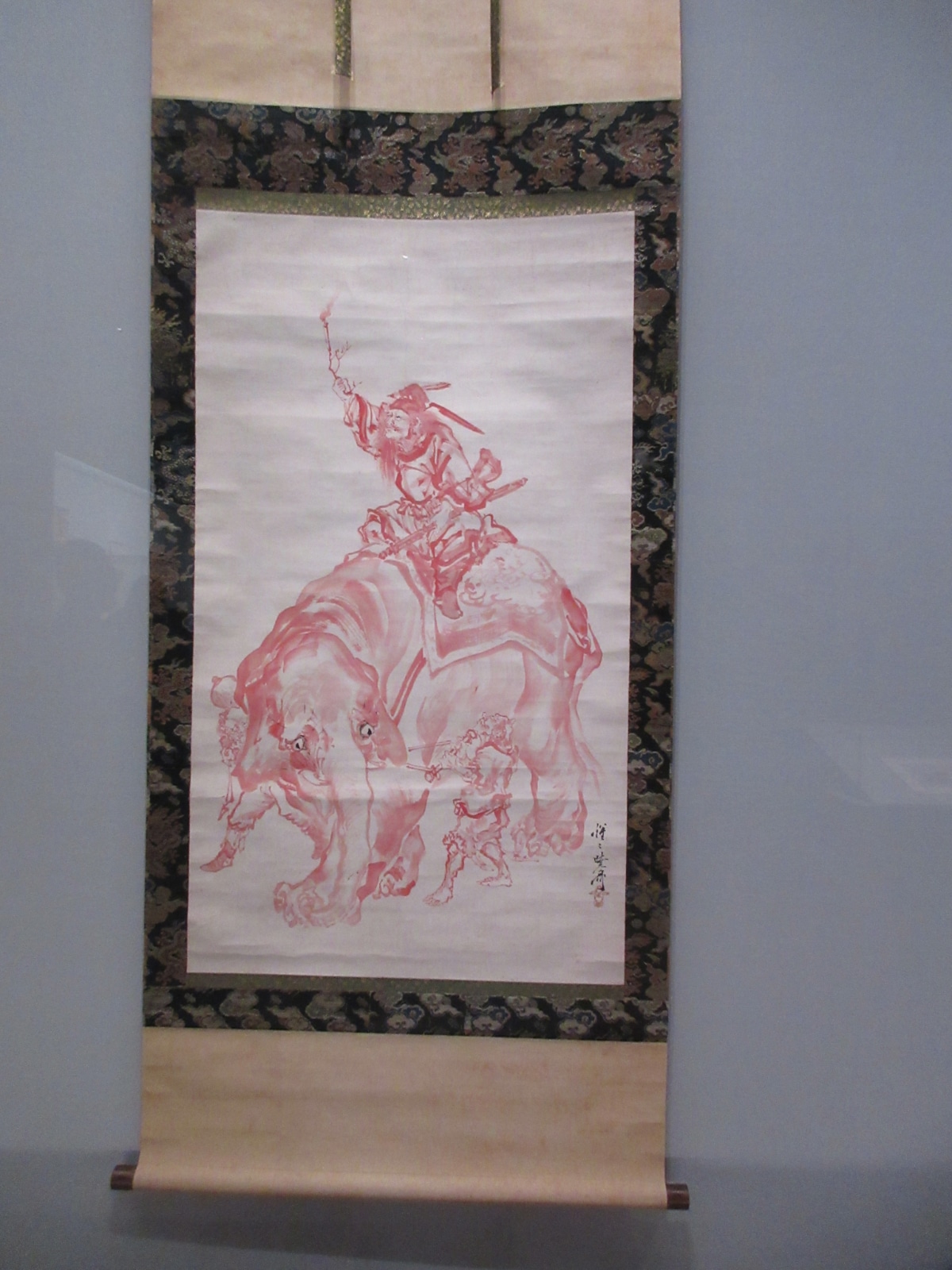
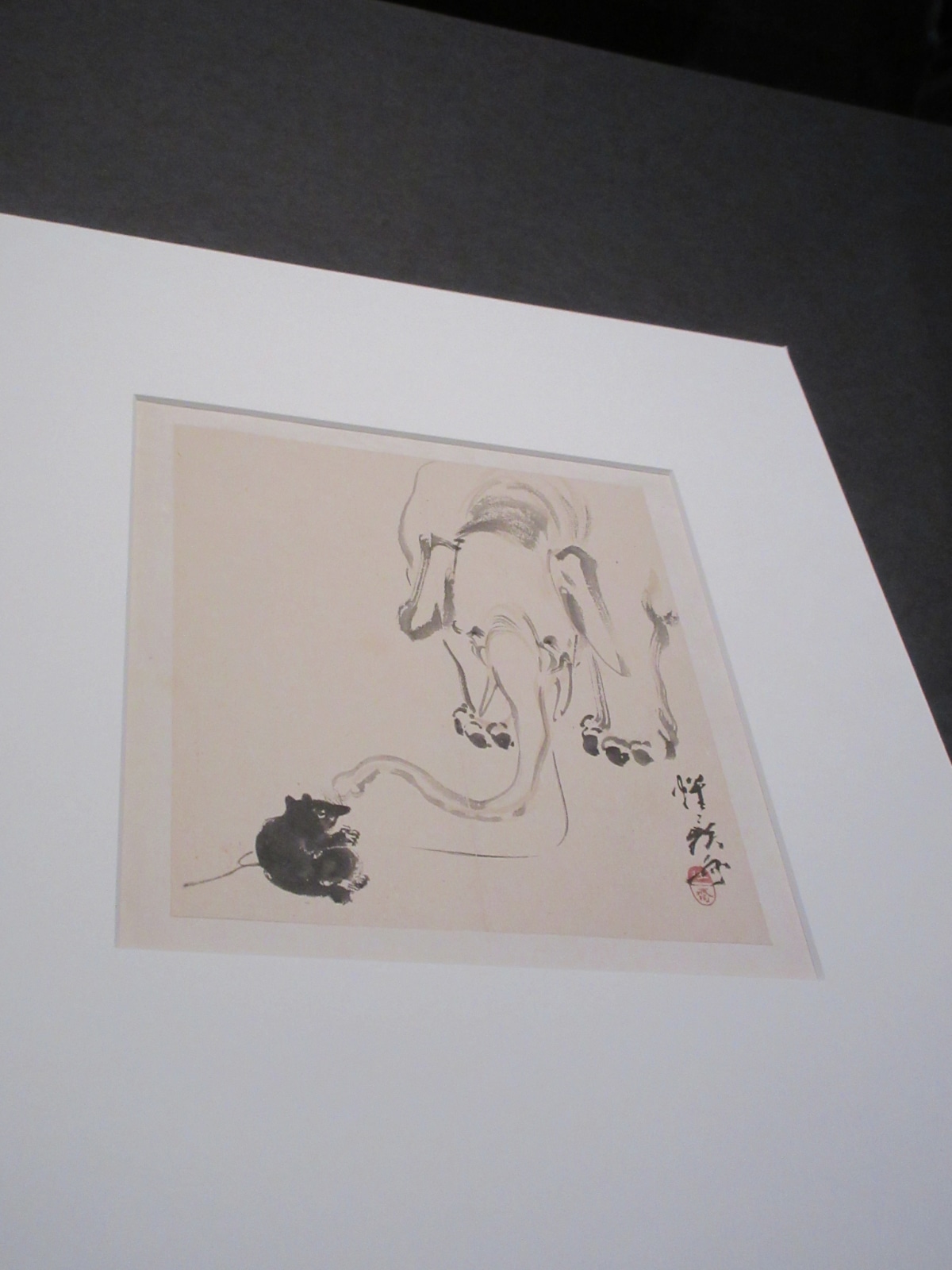
It is said that Mr. Goldman first encountered Kyōsai’s work around 1989. At that time, as an art dealer, he acquired a painting of a baby bear playing with an elephant. This charming painting quickly found a buyer and left Mr. Goldman’s possession. Afterward, Mr. Goldman experienced unbearable regret. He must have realized that he should never have let that painting go. He spent many years buying it back. That painting can be seen at this exhibition. The red thread connecting Kyōsai and Mr. Goldman is the star of the Goldman Collection, “Elephant and Baby Bear,” which is the first visitors encounter in this exhibition. The adorable baby bear playing with the elephant even brings a sense of peace to the viewer. It is probably usually displayed in Mr. Goldman’s extremely private space.
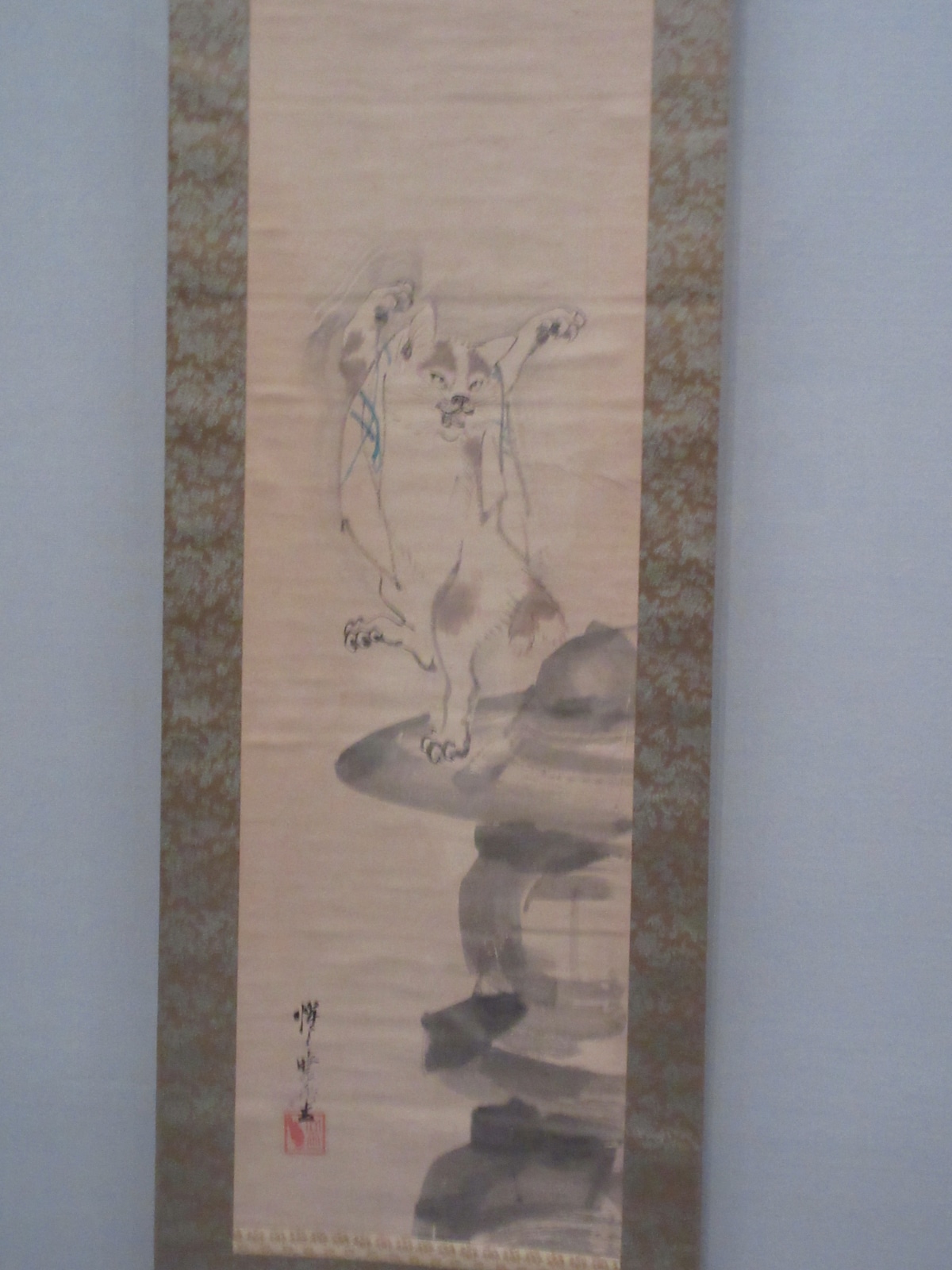
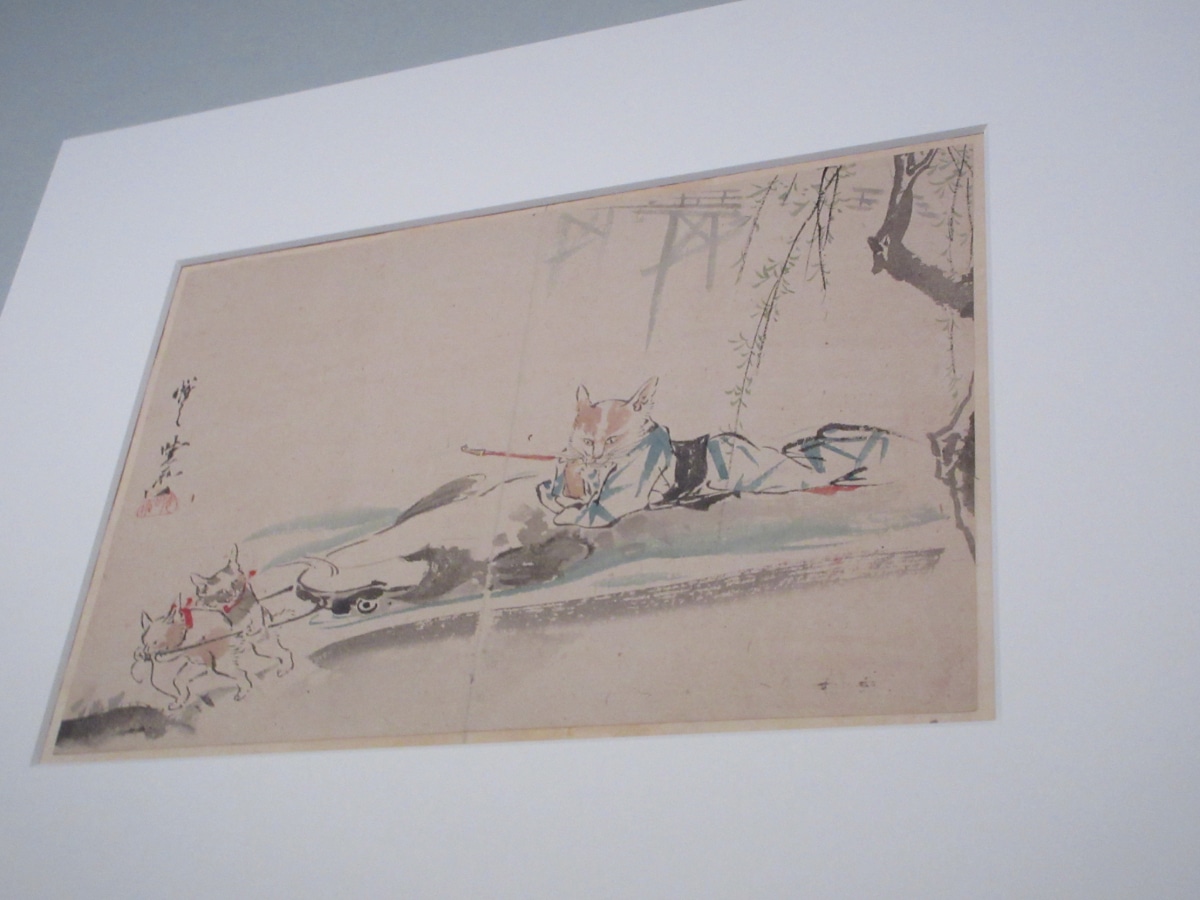
In the second chapter, titled “Beasts,” a world unfolds where animals, given rich, almost human-like expressions by Kyōsai, seem to dance wildly. The lightness of Kyōsai’s unique footwork made my heart dance.
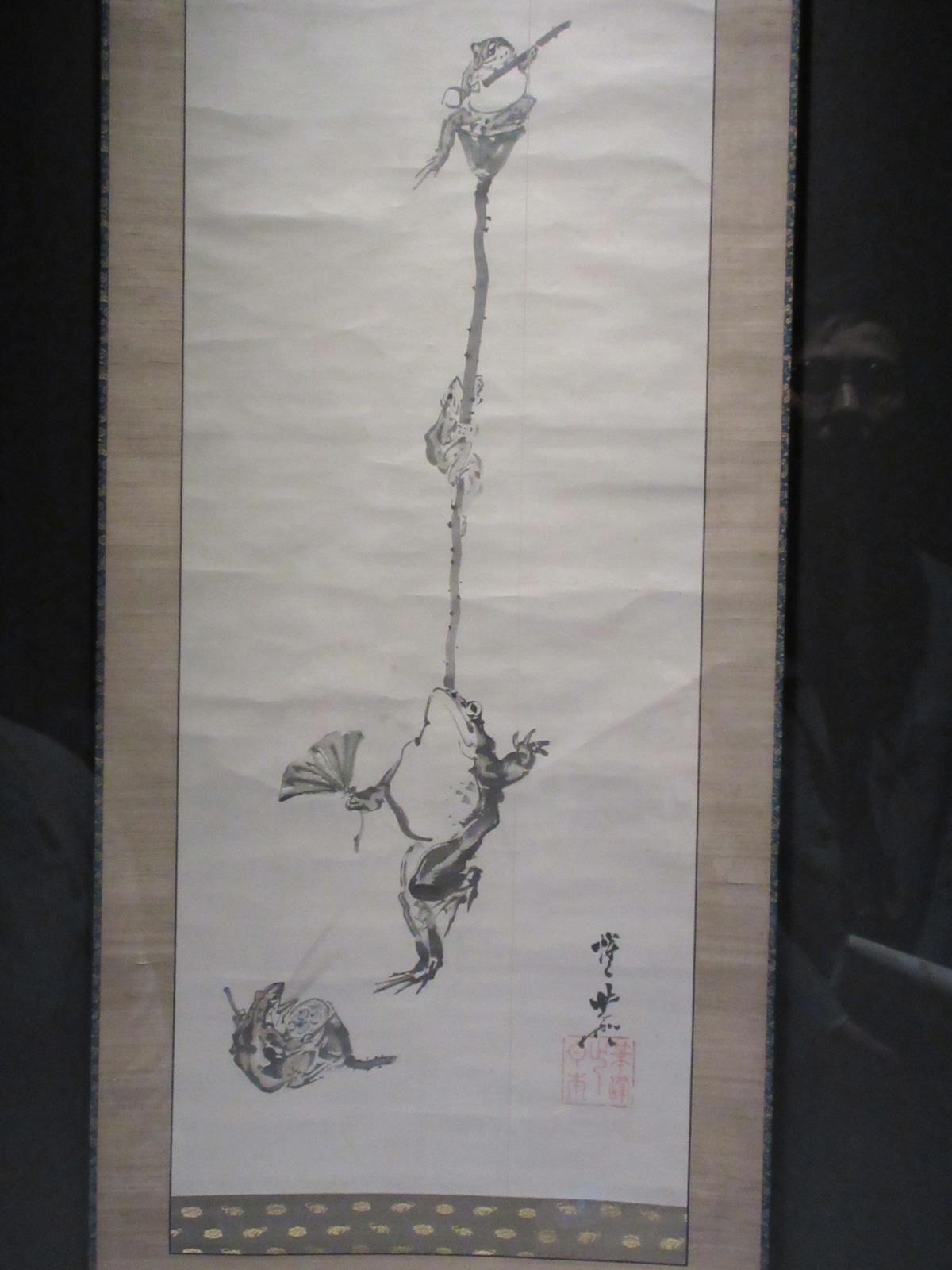
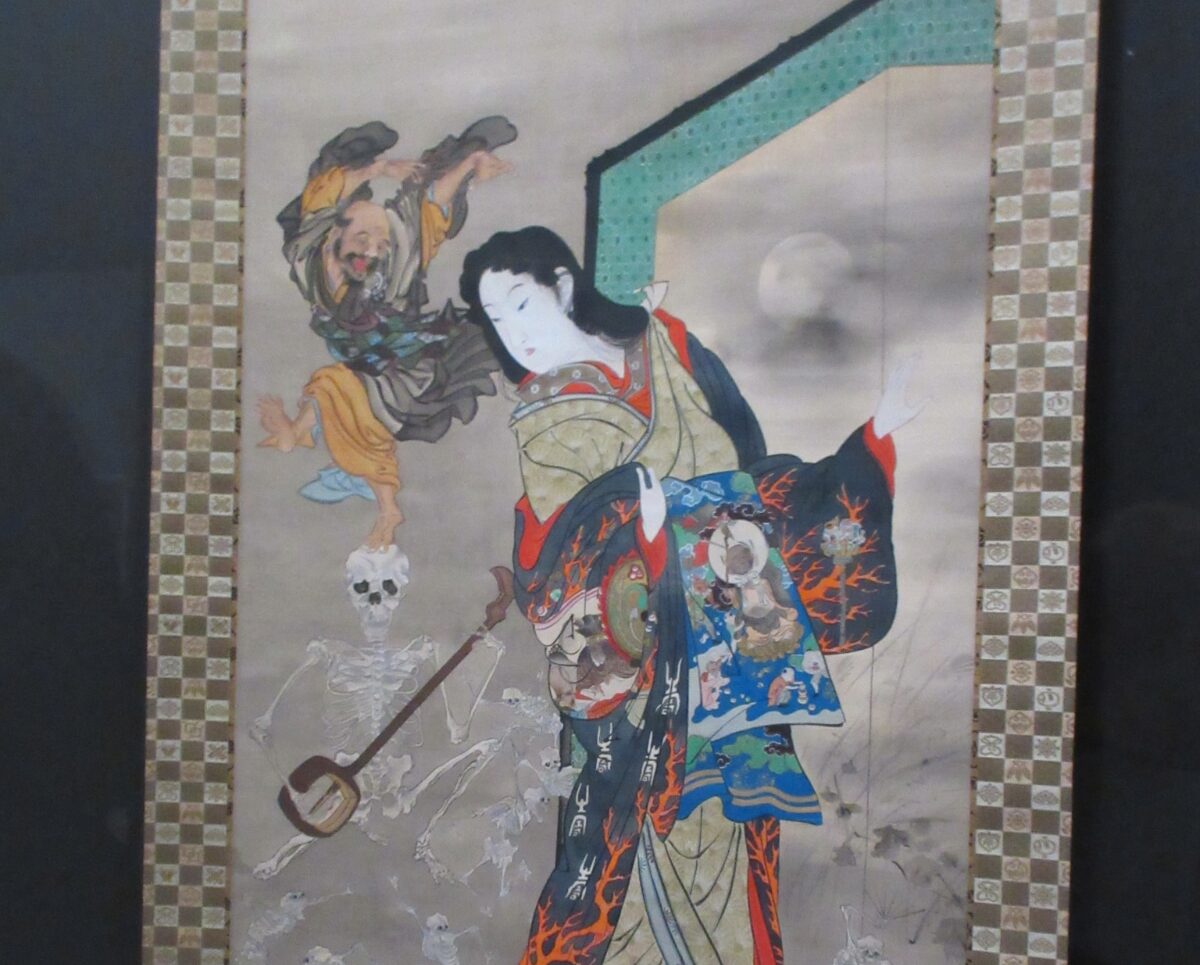
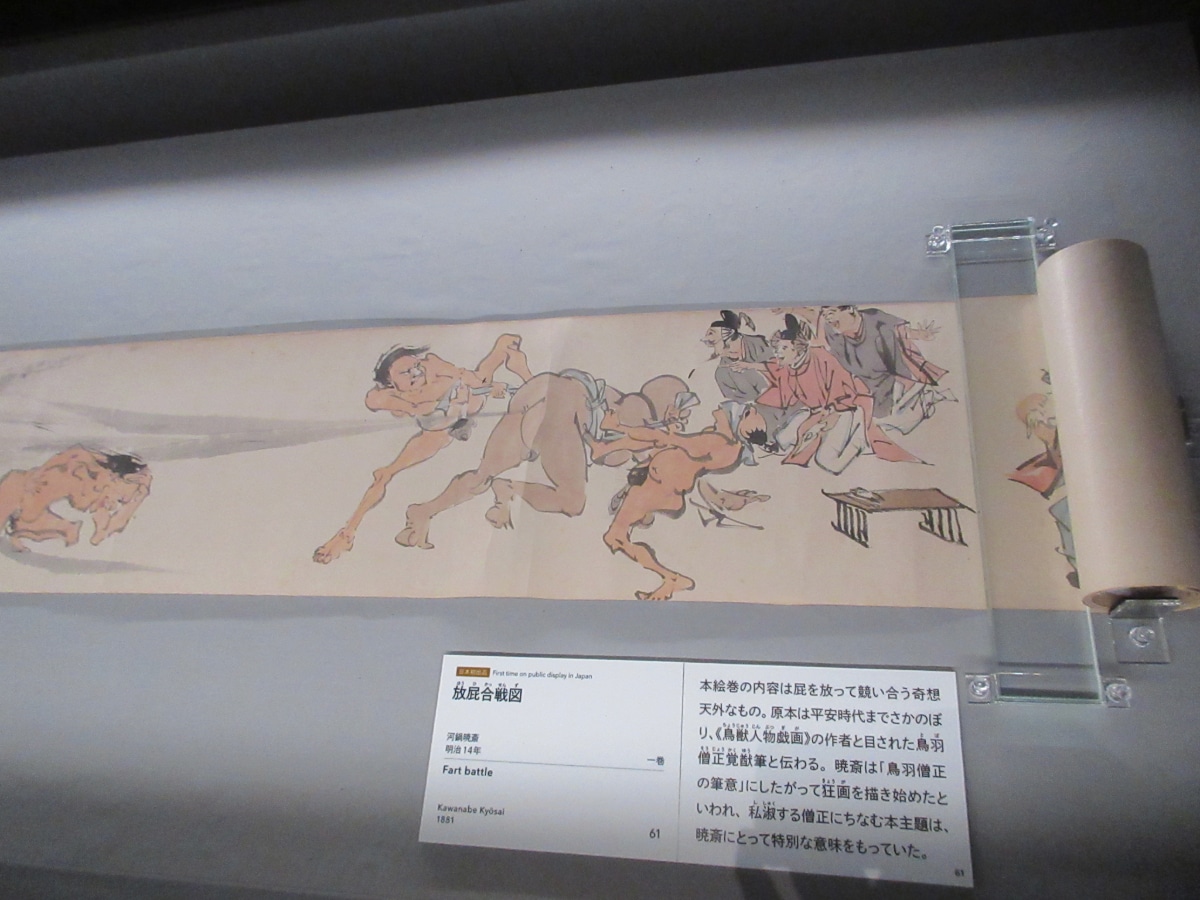
Chapter three features the “people” depicted by Kyōsai. While many historical figures are depicted, Kyōsai’s true genius lies in his satirical works of the time. During the late Edo period, around the time of the Boshin War, Kyōsai created “The Farting Battle.” This is a powerful anti-war satire that plays on the Japanese words for “soldier” (Hei in Japanese) and “fart” (He in Japanese), replacing fighting with “military strength” (Heiryoku in Japanese) with fighting with “farting strength” (Heryoku in Japanese). Josiah Conder, a foreign employed by the Japanese government, also appears. His appearance is quite amusing. Conder, being a Westerner, had difficulty sitting in the Japanese seiza position, so he is depicted lying down.
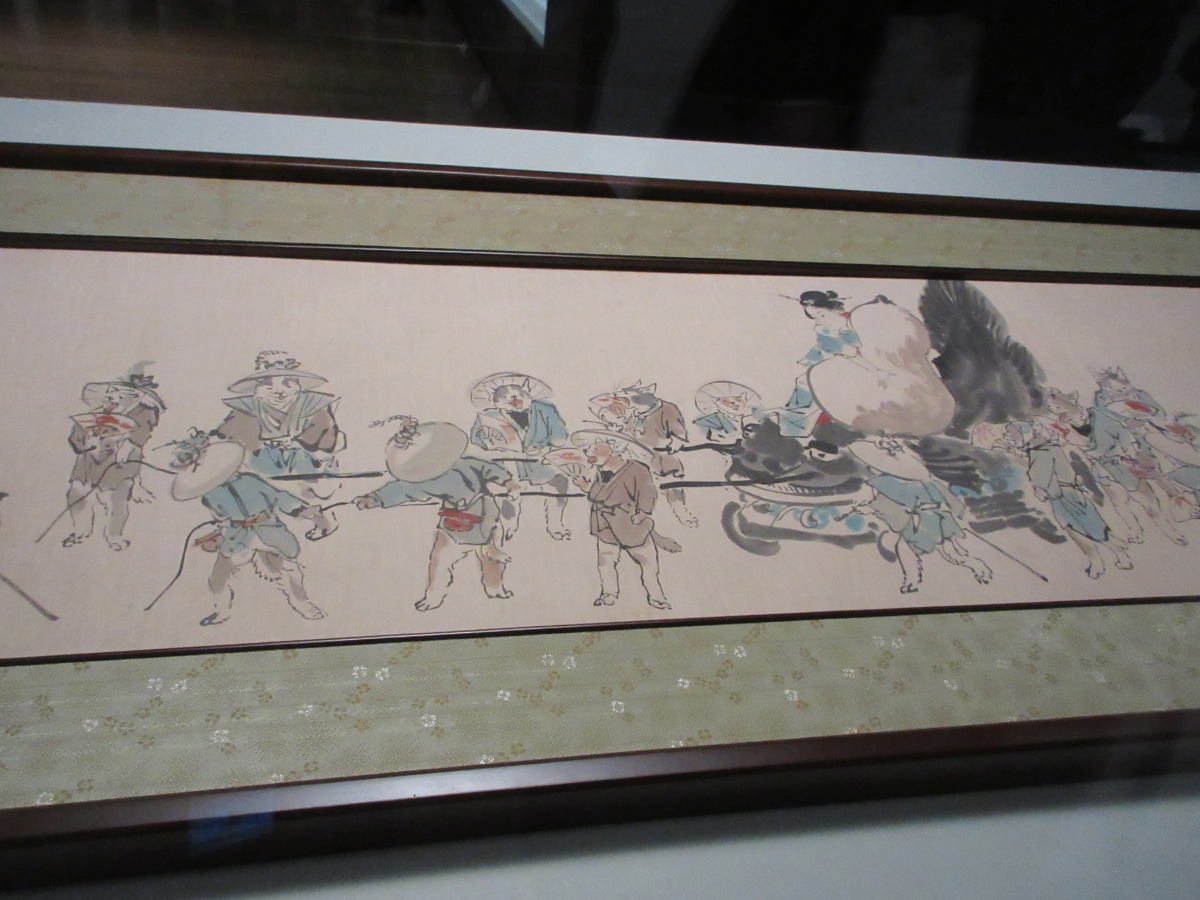
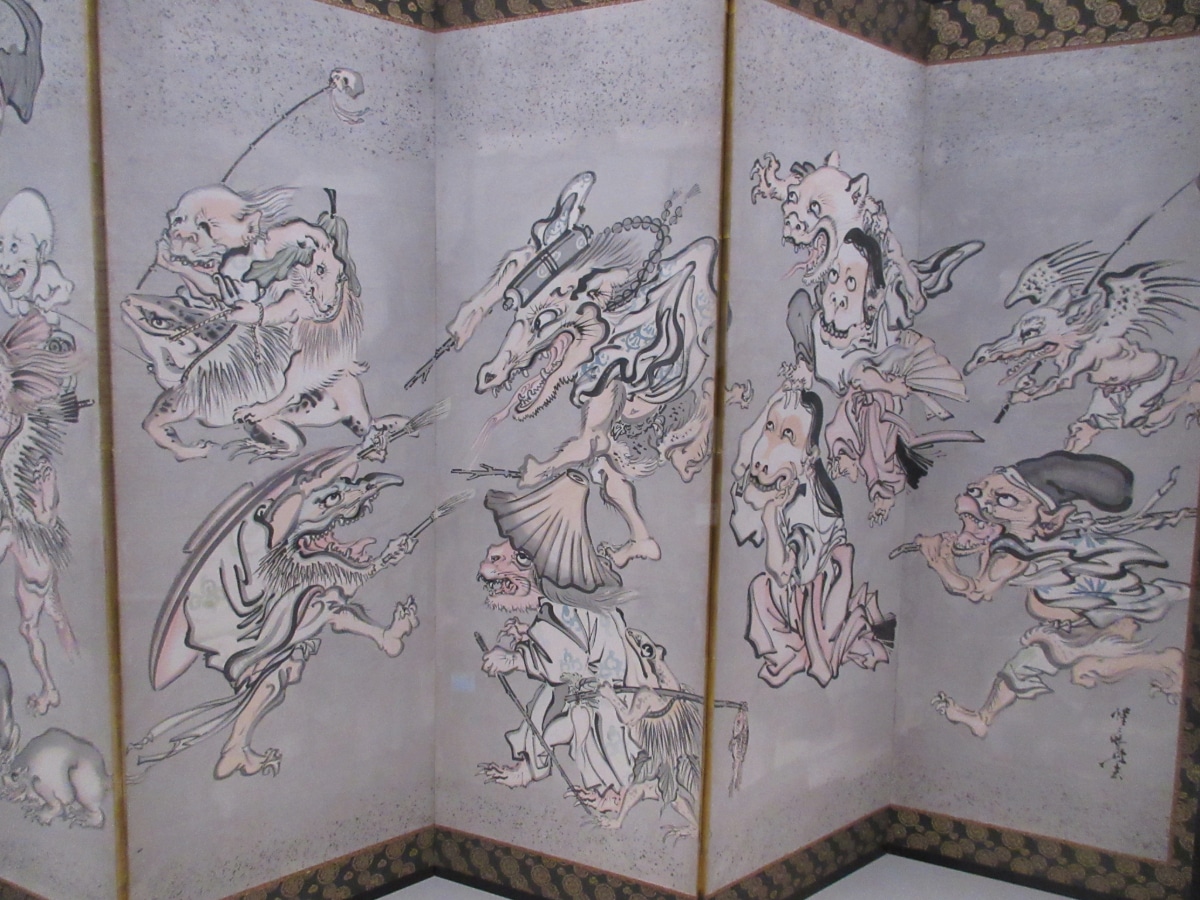
Chapter four, featuring the “Oni” (demon), doesn’t simply depict a frightening monster or demon, but rather replaces it with a human form, showcasing a variety of expressions. These include troubled faces, pensive expressions, and even playful ones. Perhaps Kyōsai wanted to convey that everyone experiences both laughter and hardship.
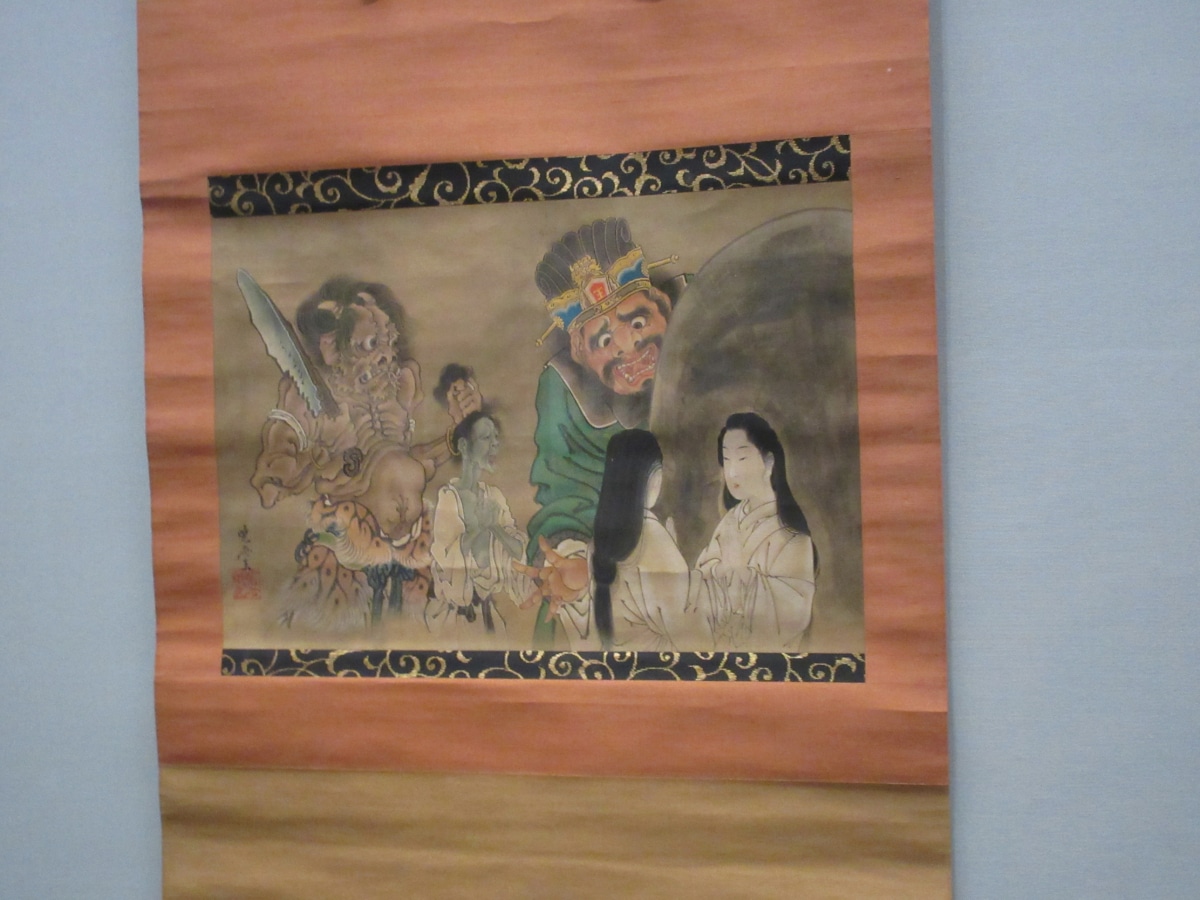
Chapter five follows the “Oni” with “The Divine.” Again, Kyōsai’s satirical intent and masterful technique allow for a seemingly effortless depiction, displaying a range of expressions.
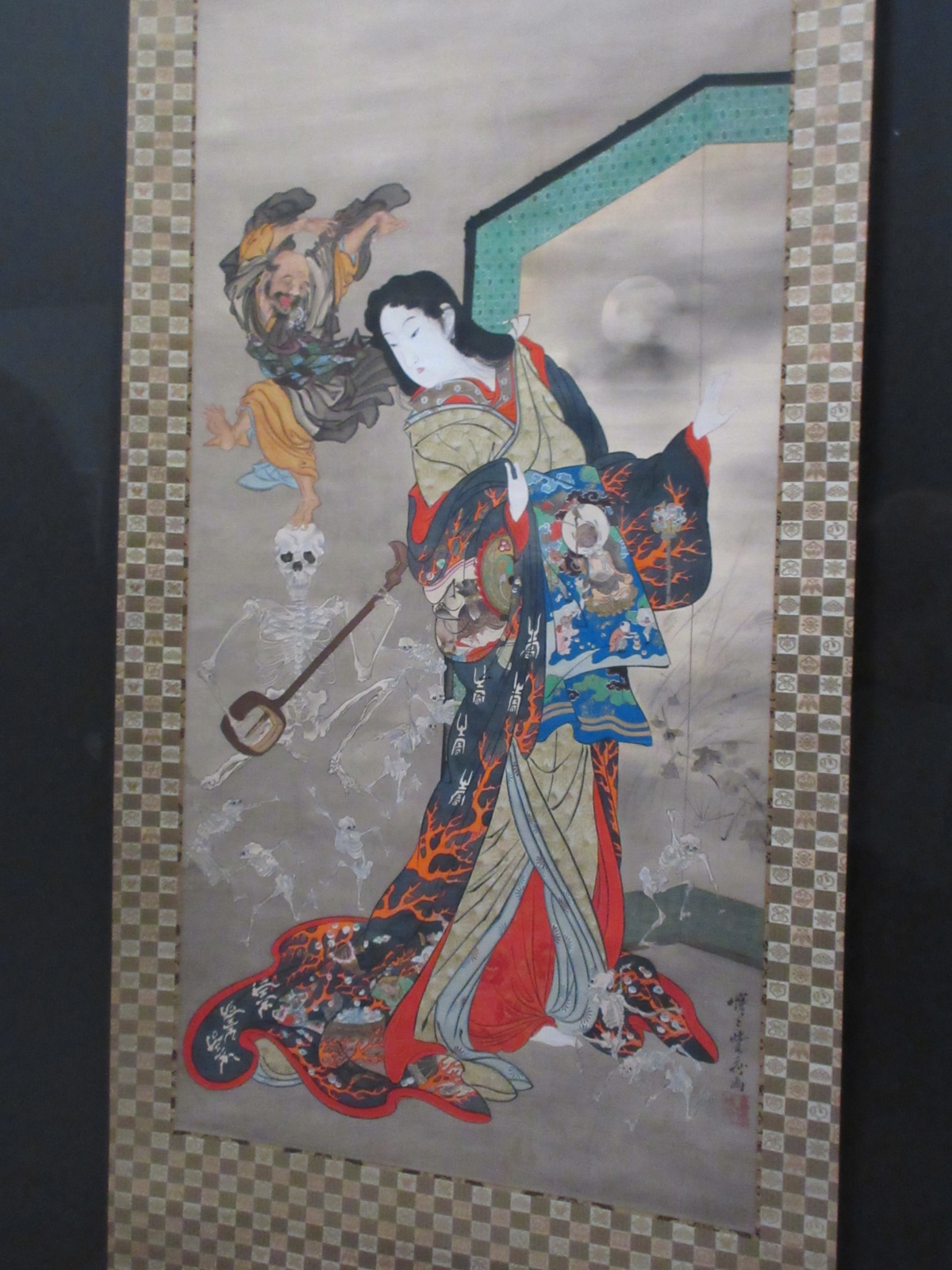
Chapter six explores the world of “woodblock prints,” which were likely widely distributed among people at the time. It was the late Edo period and the dawn of the Meiji era, and Kyōsai didn’t overlook the influx of various cultures from abroad. Here, we also see figures reminiscent of foreign experts, such as the architect Josiah Conder, with whom Kyōsai enjoyed interacting. Perhaps to Kyōsai, red-haired, blue-eyed Westerners sometimes appeared like tengu (mythical Japanese creatures).
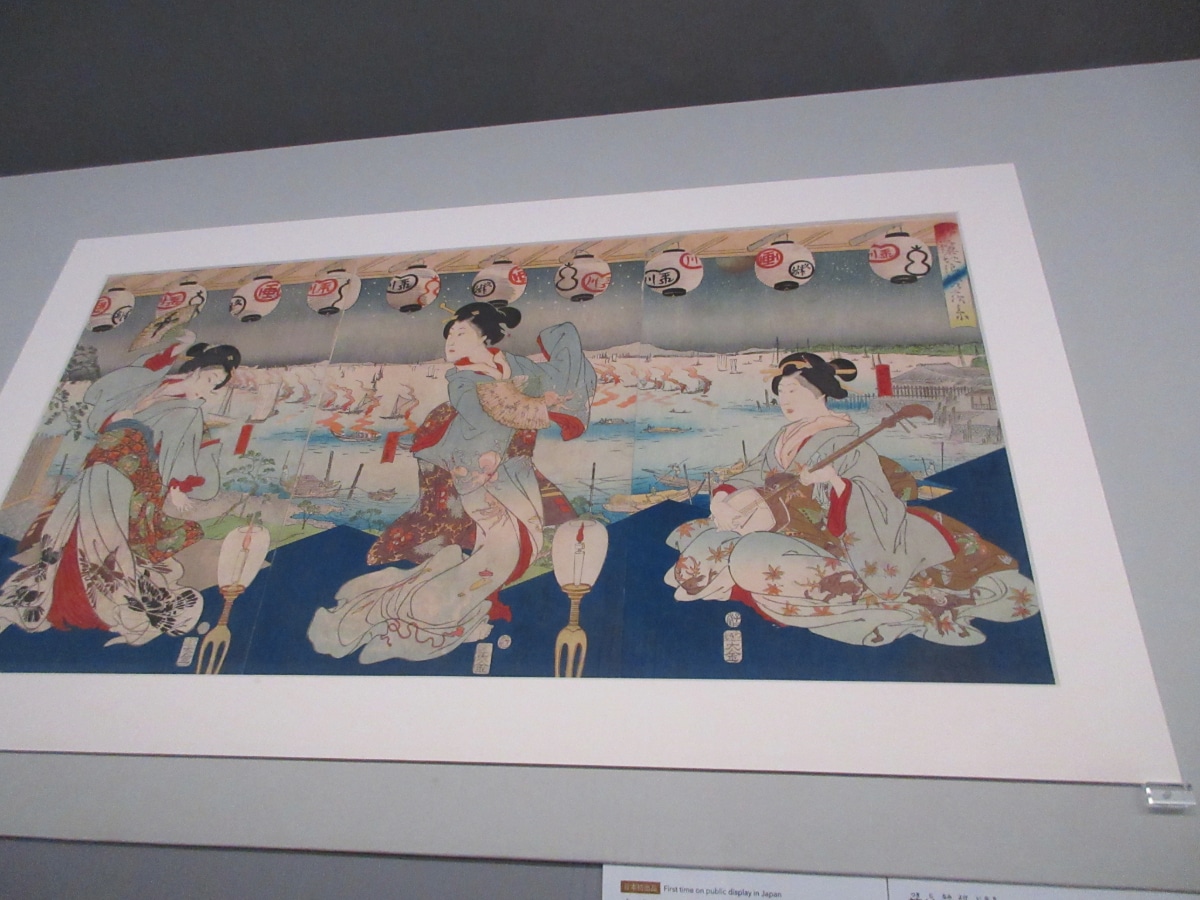
This exhibition was very easy to view. This is because the exhibition isn’t curated around a set theme, but rather by dividing Kyōsai’s works into chapters based on themes. It’s a curation centered around Kyōsai himself. It was a delightful exhibition where one could fully appreciate Kyōsai’s worldview. The latter half featured many works from Mr. Goldman’s collection that were being shown in Japan for the first time, which offered new discoveries and was truly moving.
Israel “Izzy” Goldman commented, “I didn’t choose Kyōsai; Kyōsai chose me.” Kyōsai died of stomach cancer in 1889 at the age of 57. Mr. Goldman began collecting Kyōsai’s works around 1989, 100 years after his death. One hundred years after his passing, Kyōsai finally found the collector he desired.
The exhibition opens with a photograph of Mr. Goldman smiling while holding his beloved dog, Molly. His gentle gaze reminded me of Kyōsai. Kyōsai is often associated with the image of a heavy drinker, a cynical satire of society, and a masterful artist with extraordinary skill. However, the real Kyōsai was a doting father with a gentle side.
Kyōsai was married three times. His first wife was Kiyo, the second daughter of Suzuki Kiitsu, a prominent figure in the Rinpa school, but their marriage lasted less than two years before she died. He then married Tose, but she also died shortly after the birth of Kyōun, who would later become a painter. It is said that Kyōsai himself sought out other mothers to breastfeed his son after his wife’s death. Later, at the age of 37, he married Chika for the third time, and they had Kyōsui, a female painter who would later become Kyōsai’s successor, and Kiroku, who was adopted into the Akabane family. When his daughter, later known as Kyōsui, was five years old, Kyōsai gave her a drawing manual titled “Persimmon and Dove,” beginning his instruction in Japanese painting. He also painted hina dolls for his younger children and even made board games like sugoroku. Kyōsai clearly possessed a gentle, family-oriented side. He surely watched over his children’s growth with a kind gaze.
There must be an invisible bond between Mr. Goldman and Kyōsai, who met after 100 years. Mr. Goldman will undoubtedly continue to travel the world, adding Kyōsai’s works to his collection. This is what Kyōsai most desired. The dream Mr. Goldman, inspired by Kyōsai in his youth, was also the heartfelt wish of the genius painter. The Goldman Collection, considered the world’s largest Kyōsai collection, will undoubtedly continue to grow. This was a must-see exhibition, leaving us eagerly anticipating the next one.
Read also,
- “Living Together,” a Solo Exhibition by Suiko Ohta
- A Special Collaboration of Toyohiko Nishijima and Shogo Kariyazaki
- “Fluid Aesthetics” Exhibition, Currently Being Held
- Solo Exhibition by Japanese Painter Suiko Ohta “Living Together”
- “The Maeda: Legacy of a Prosperous Samurai Family” – A Magnificent Exhibition Commemorating the 100th Anniversary of the Maeda Ikutokukai Foundation