Minato Ward’s “Play, Meet, Learn: Spring Rokusan Hiroba Festa” Romanian Embassy Participates and Holds Workshop
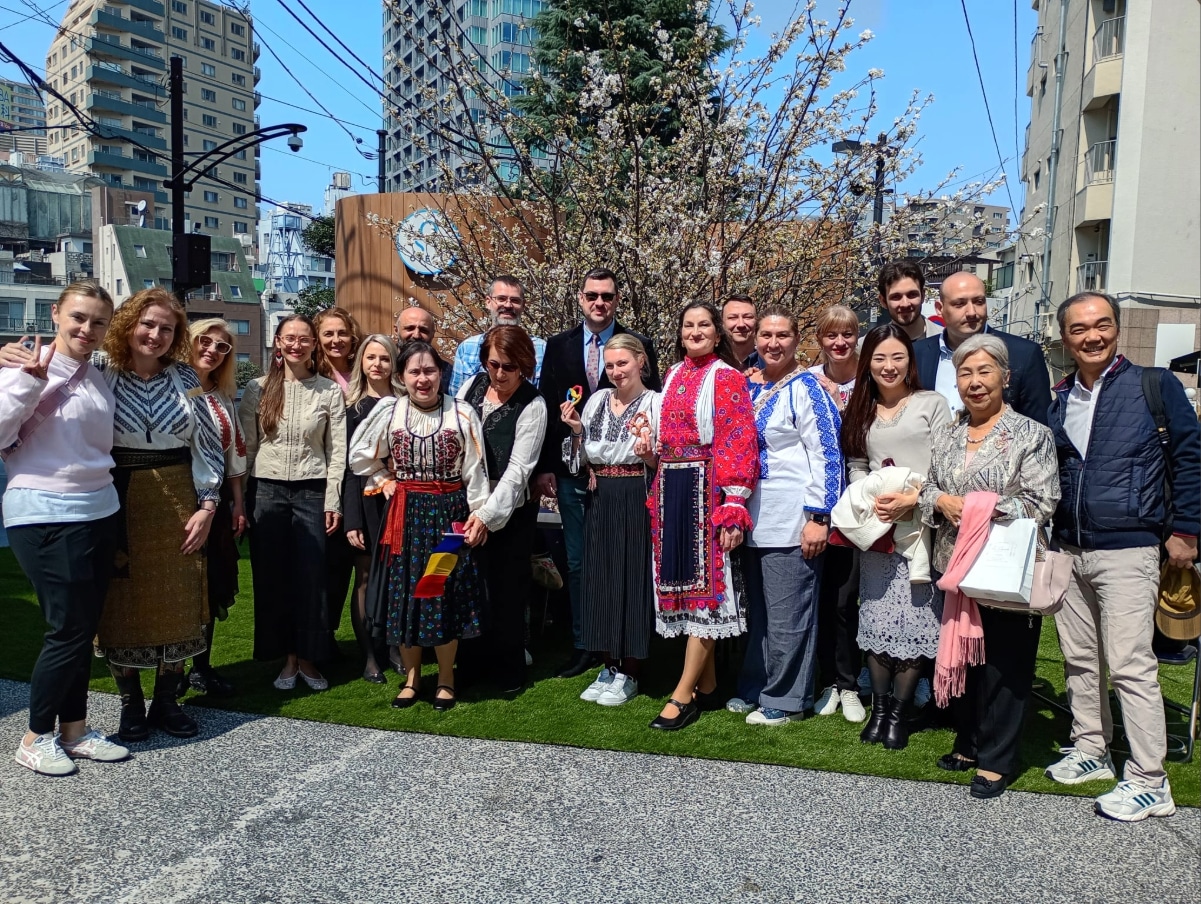
The project was organized by Romanian Cultural Institute in Tokyo, in partnership with Embassy of Romania.
The “Spring Rokusan Hiroba Festa” was held at Roppongi 3-chome Children’s Park (commonly known as “Rokusan Hiroba”), which was renovated last year.
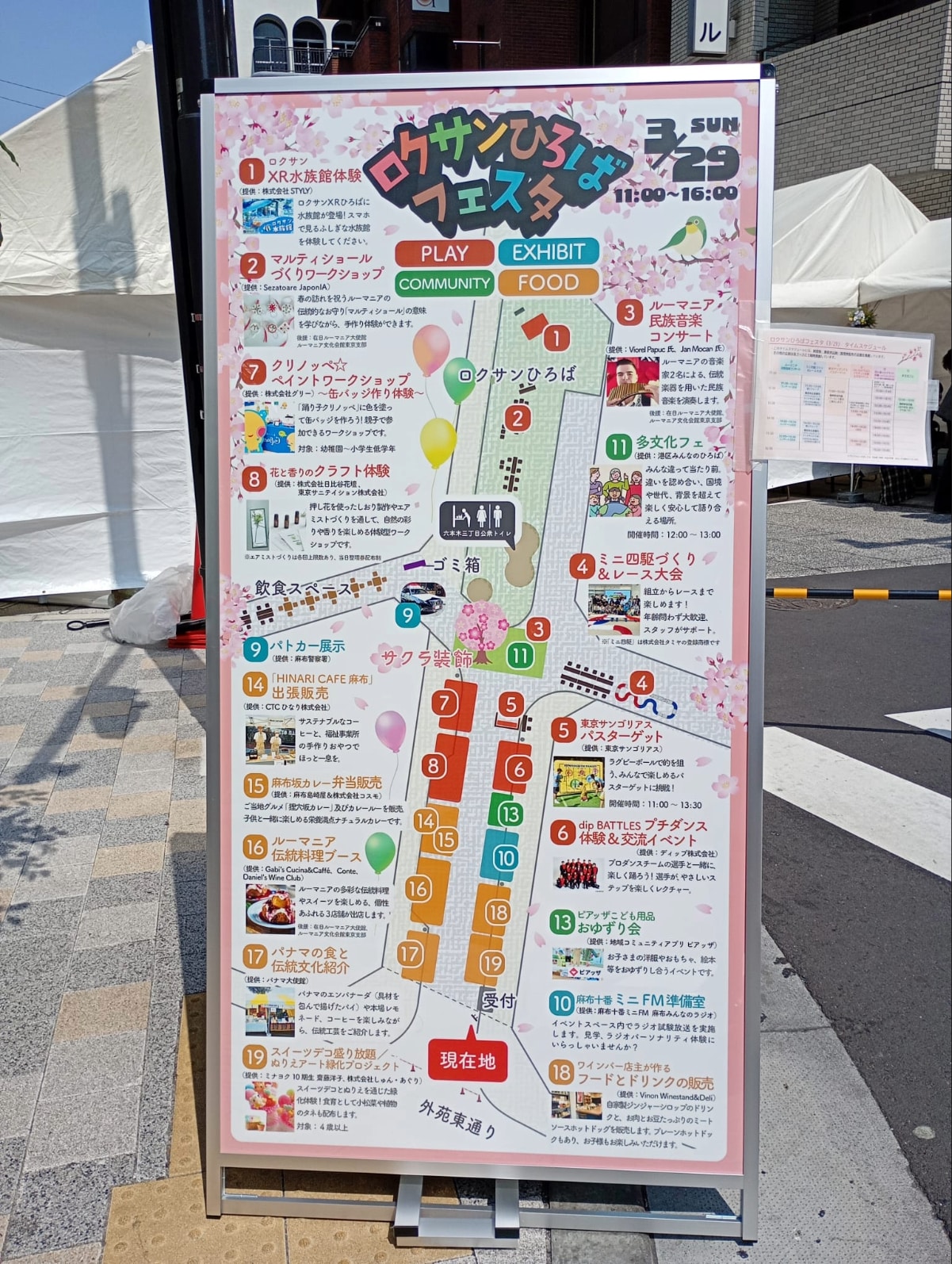
Amidst the tents lined with various shops, a workshop was held where participants could experience making “Mărțișor”, a traditional Romanian amulet celebrating the arrival of spring.
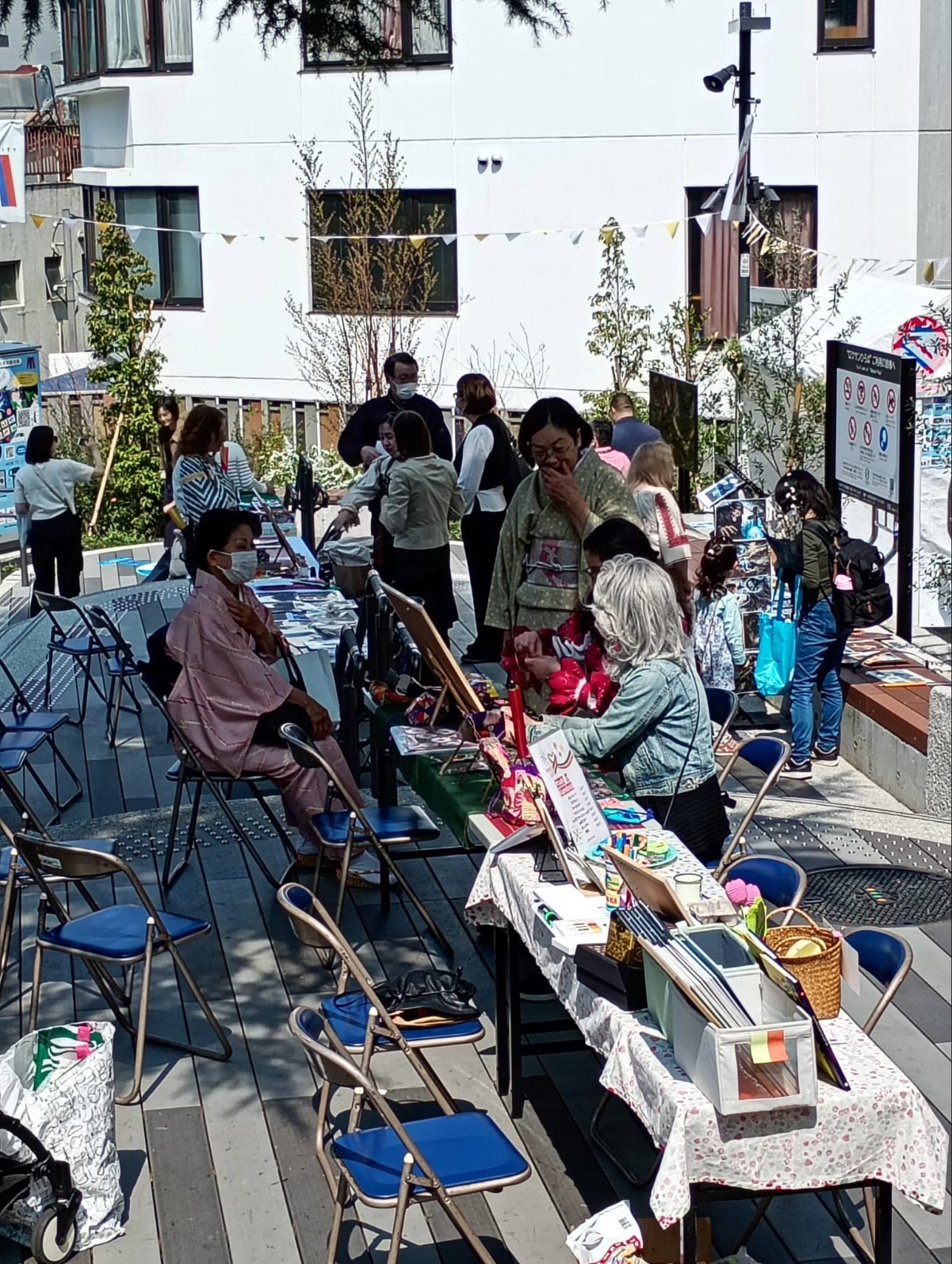
This workshop was planned and held in collaboration with the Romanian Embassy by Sezătoare JaponIA. This is a community mainly composed of Romanian women living in Japan, engaged in activities that introduce Romanian traditional culture, handicrafts, and seasonal events. This time, they taught the meaning, legends, and making methods of “Mărțișor,” contributing to an understanding of Romanian culture.
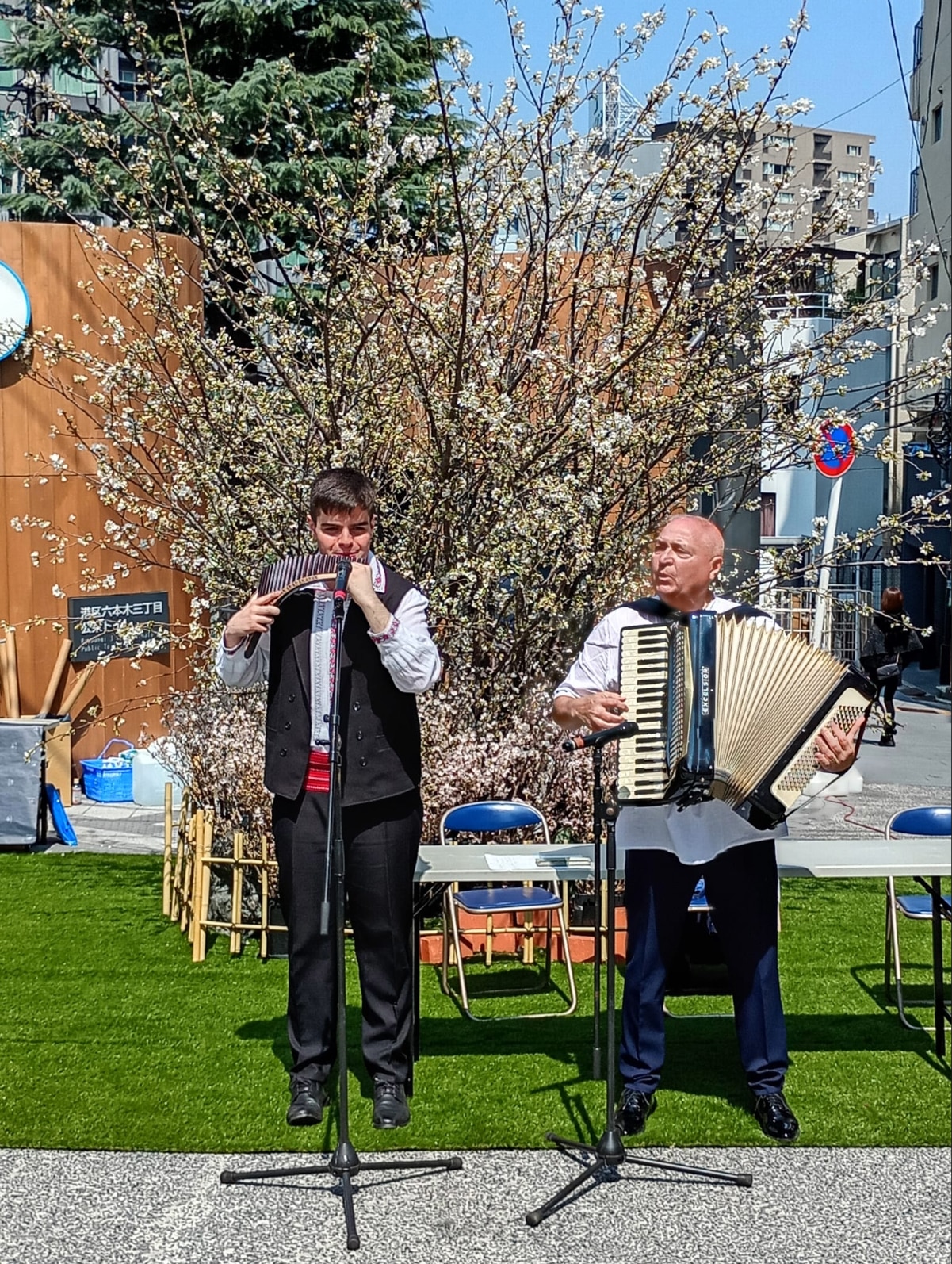
The Romanian community in Japan is relatively small, but activities to preserve its culture are very active, centered around the Romanian Embassy, the Romanian Cultural Institute in Tokyo and the Romanian Orthodox church. These communities are mainly maintained and run by Romanian women living in Japan, many of whom are also married with Japanese men. Through these activities, Romanian culture is being passed down to the next generation in Japan.
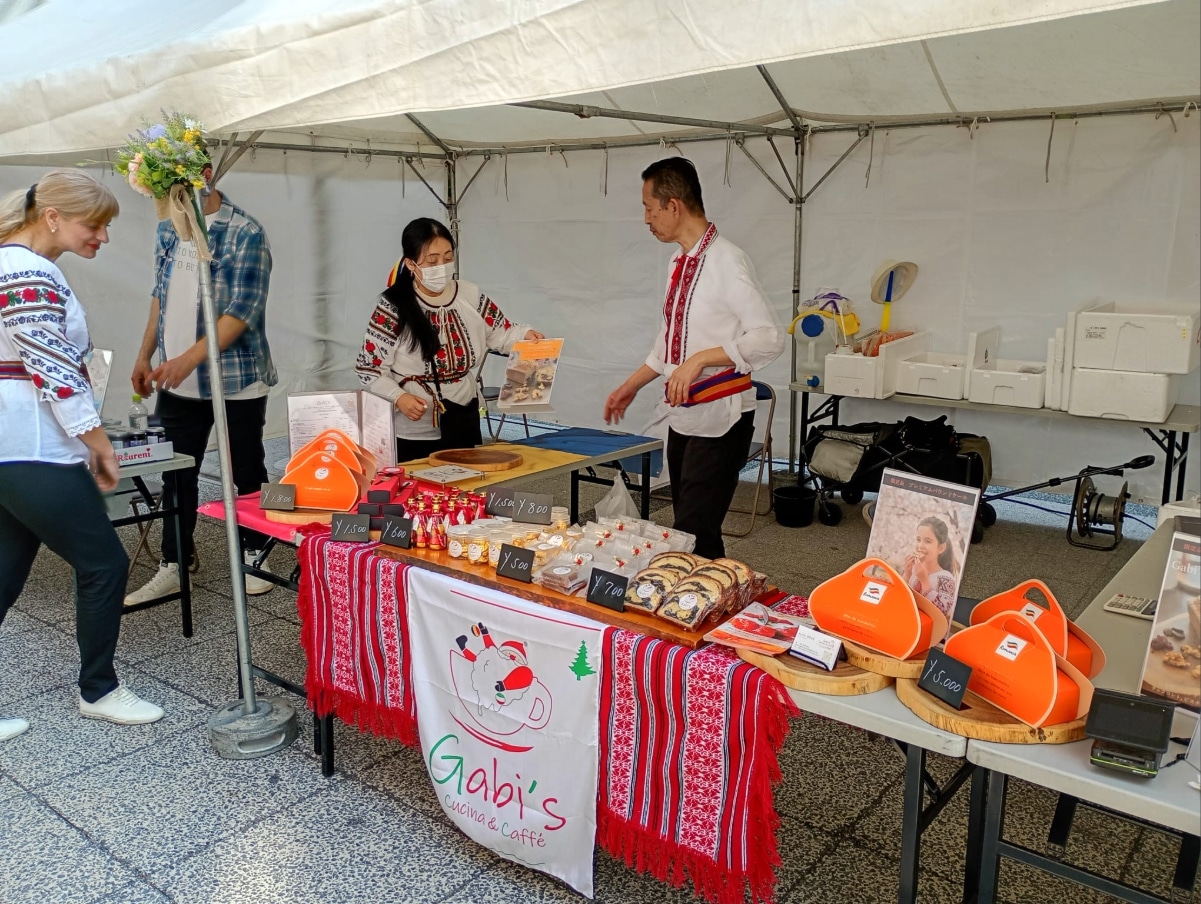
Many children with Romanian roots participated in this workshop. The origin and meaning of “Mărțișor,” a custom that expresses the joy of spring after a long, cold winter, were explained to the Japanese participants.
In increasingly globalized Japan, these activities by people with foreign roots to pass on authentic culture contribute to creating a more diverse and accepting society.
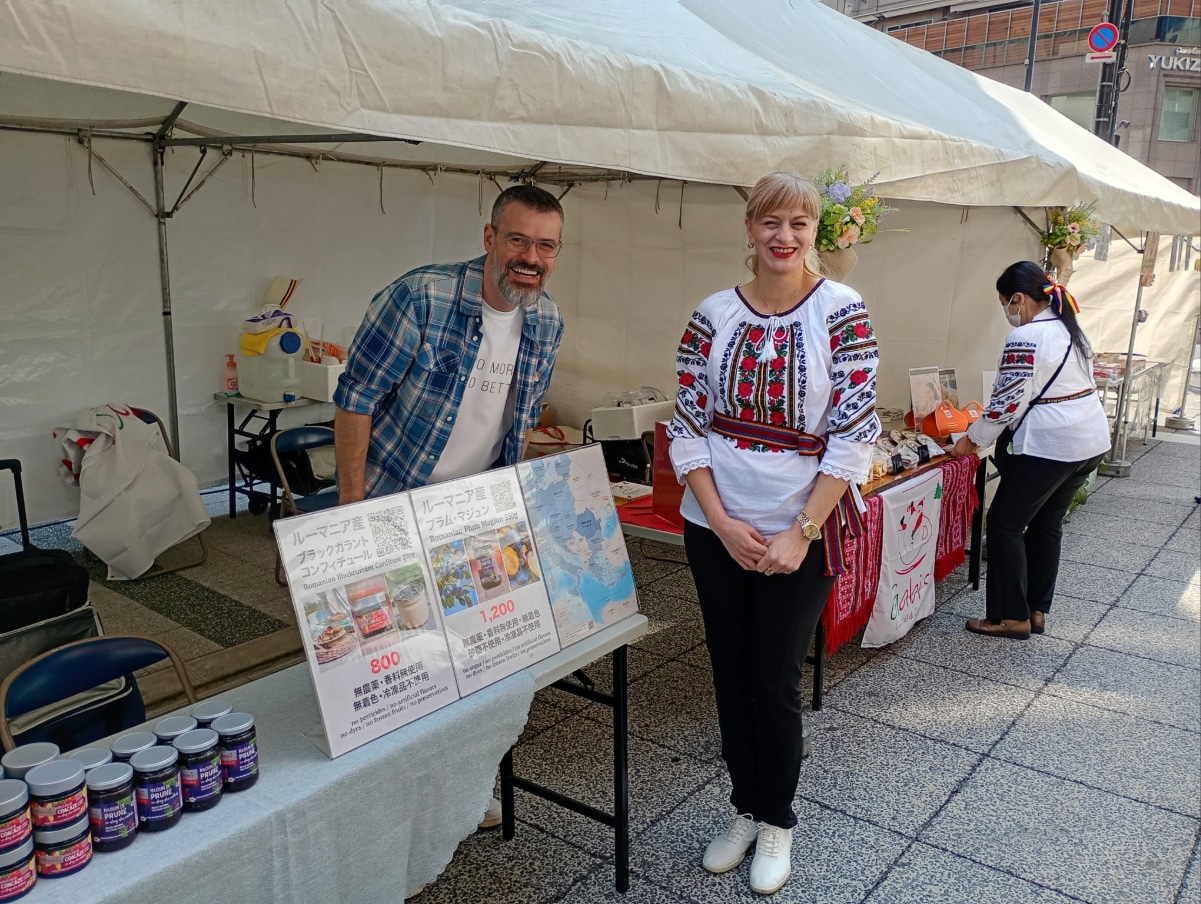
Currently, the world is unstable, with division, invasion, war, and conflict occurring in various parts of the globe.
It is truly wonderful that learning about each other’s cultures deepens mutual understanding and fosters an attitude of carefully listening to the opinions of people from different cultures. We look forward to the Romanian Cultural Institute in Tokyo and the Romanian Embassy holding another workshop next year.