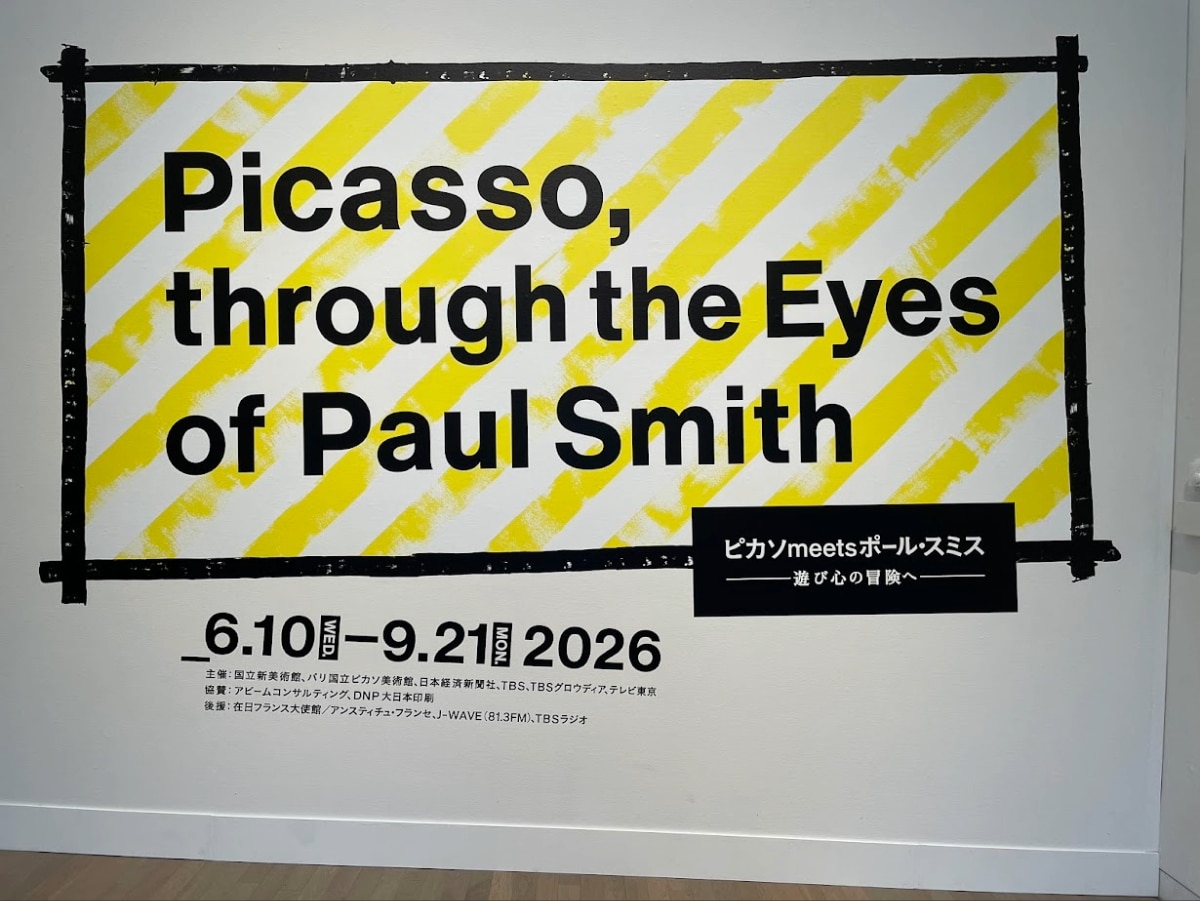
Picasso, through the Eyes of Paul Smith: An Adventure in Playfulness
Viewing Art in a Venue Layout That Enhances the Works
The exhibition is organized in collaboration with the Musée National Picasso-Paris
“Picasso, through the Eyes of Paul Smith: An Adventure in Playfulness”—currently running at The National Art Center, Tokyo (from June 10, 2026, to September 21, 2026)—is a striking exhibition where playfulness and art come together. Stepping inside creates the illusion of entering an operatic stage set. Beyond the emotional impact of viewing fine art, visitors are sure to leave with positive feelings, thinking, “That was fun!” or “I experienced another dimension.”
The exhibition’s layout was designed by Paul Smith, the British designer renowned for his playful spirit and free-spirited use of color. While Smith is known for his imaginative designs, his tailoring is rooted in tradition, precision, and meticulous care. The space showcases a collection of Picasso’s works from the Musée National Picasso-Paris. This exhibition represents a perfect fusion of these two distinct personalities.
The exhibition unfolds in a loose chronological sequence, tracing Picasso’s career from his early days to his final years. Visitors can observe the evolution of his artistic style and the shifts in his vision. It appears as though Smith designed the layout with an intuitive understanding of these changes—as if he had conversed directly with Picasso himself.
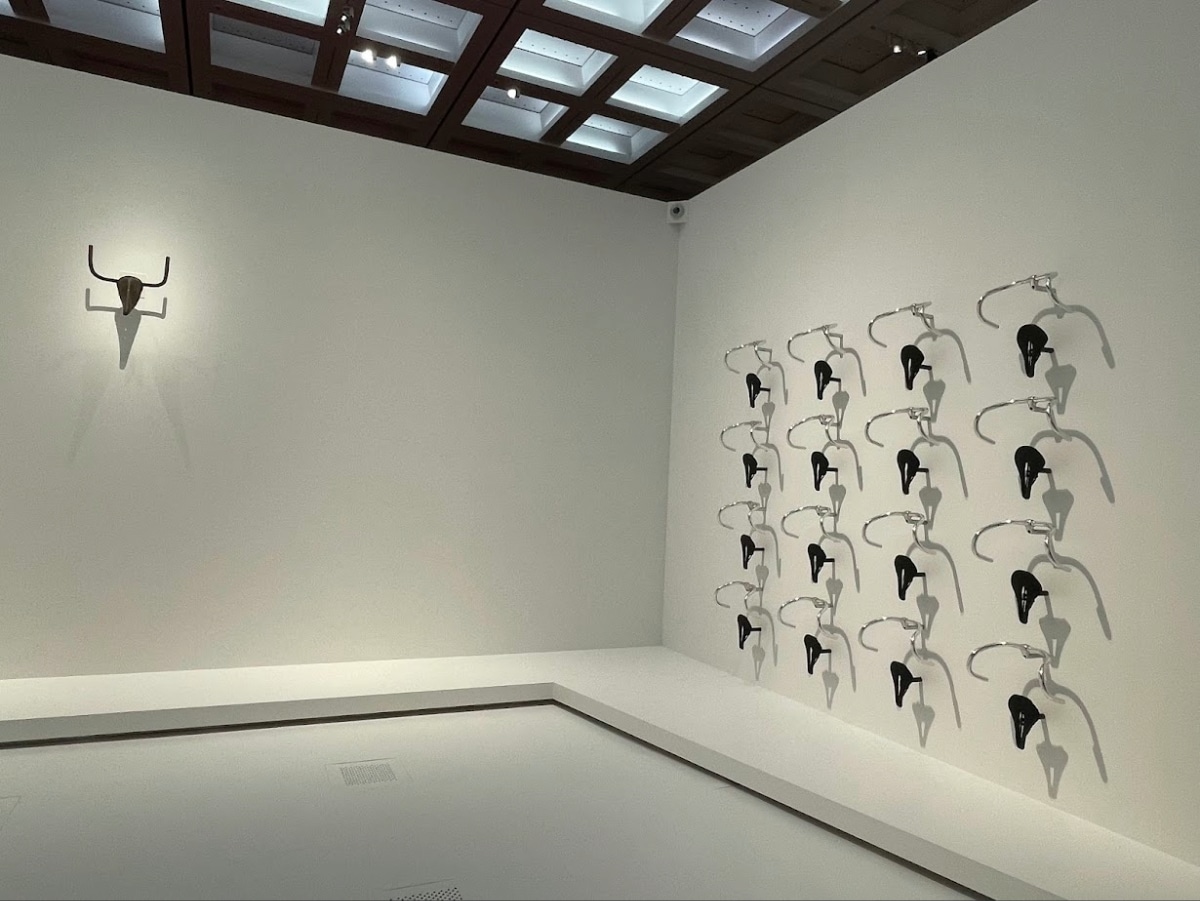
The first area visitors encounter is “Section 00: Trompe l’Esprit (Deceiving the Mind).” Here, viewers are confronted with the question: “Is it a bicycle saddle and handlebars? Or is it a bull’s head?”
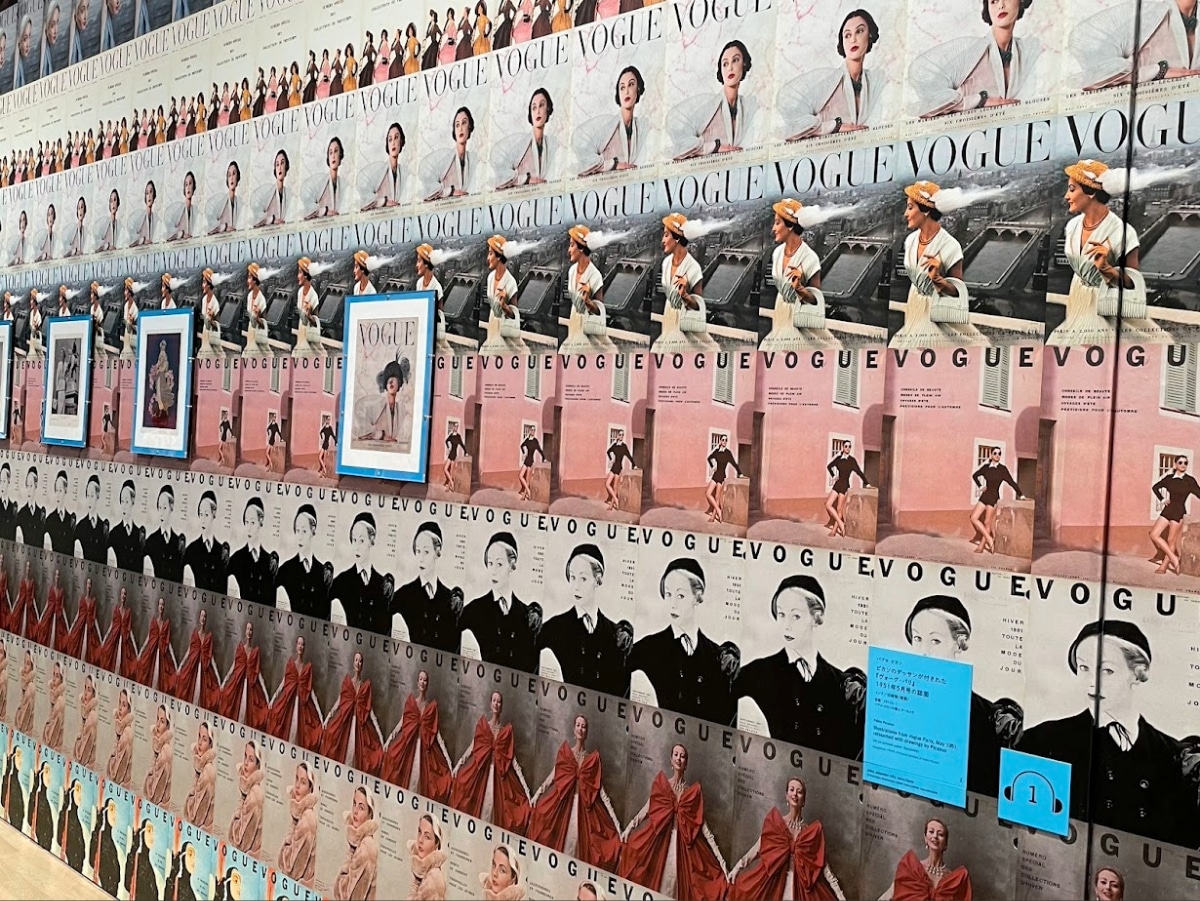
In the subsequent “Section 01: The Artist in Vogue,” visitors can view works in which Picasso added lines to photographs from Vogue Paris. This section offers a glimpse into a habit Picasso had practiced since childhood: drawing directly onto the pages of books. It is fascinating to see how a woman in a beautiful wedding dress—originally featured in *Vogue*—is transformed into an otherworldly figure through Picasso’s artistic vision. Paul Smith enhances this effect by incorporating a Vogue cover into the spatial layout, allowing Picasso’s worldview to resonate more deeply with the viewer.
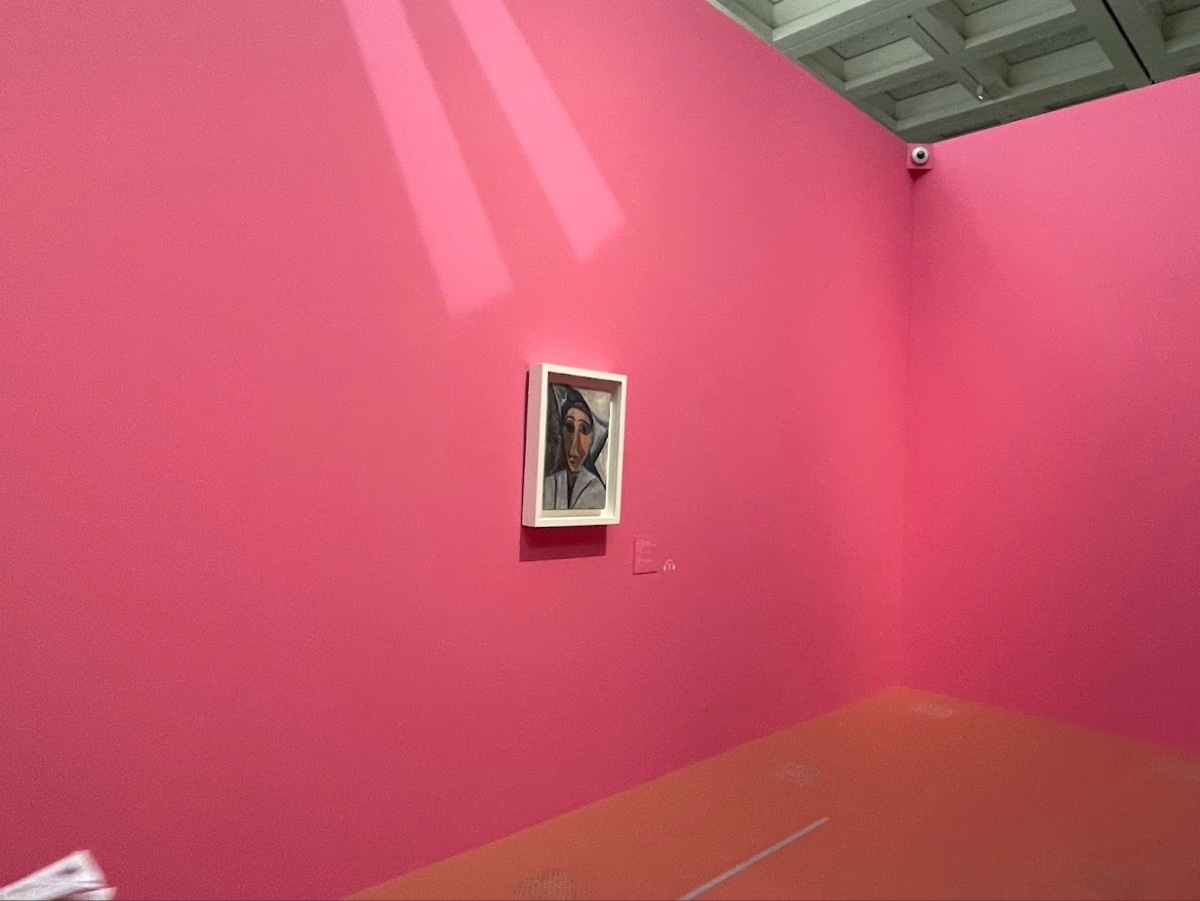
In the space titled “Section 03: Women in Rose—A Prelude to *Les Demoiselles d’Avignon*,” one can sense the pivotal moment when Picasso’s style began to shift toward geometric forms. Paul Smith has infused this area with intense shades of pink and orange; standing within it creates the visual illusion that the floor itself is rising. This staging serves as a powerful homage to the violent, groundbreaking visual innovation Picasso achieved in *Les Demoiselles d’Avignon* (1907)—a work that completely overwhelmed its audience.
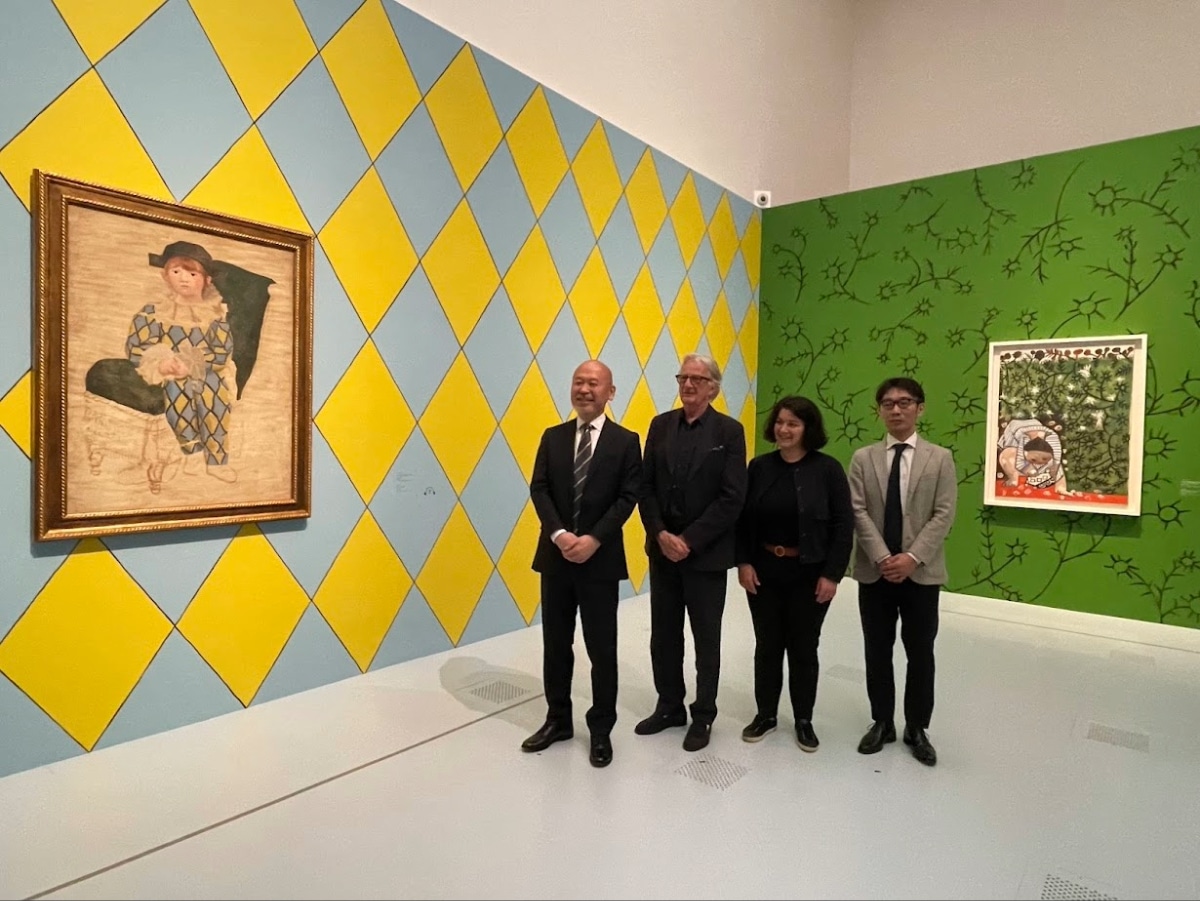
The space titled “Section 07: Childhood” showcases the creative world Picasso developed through his engagement with the performing arts. Picasso loved bullfighting and held a deep interest in Spanish performance traditions, such as flamenco. Works centering on childhood—including depictions of his son Paulo dressed as a Harlequin—are displayed here. Paul Smith’s design, reminiscent of a Harlequin’s costume, evokes the colorful yet melancholic atmosphere of that character’s world.
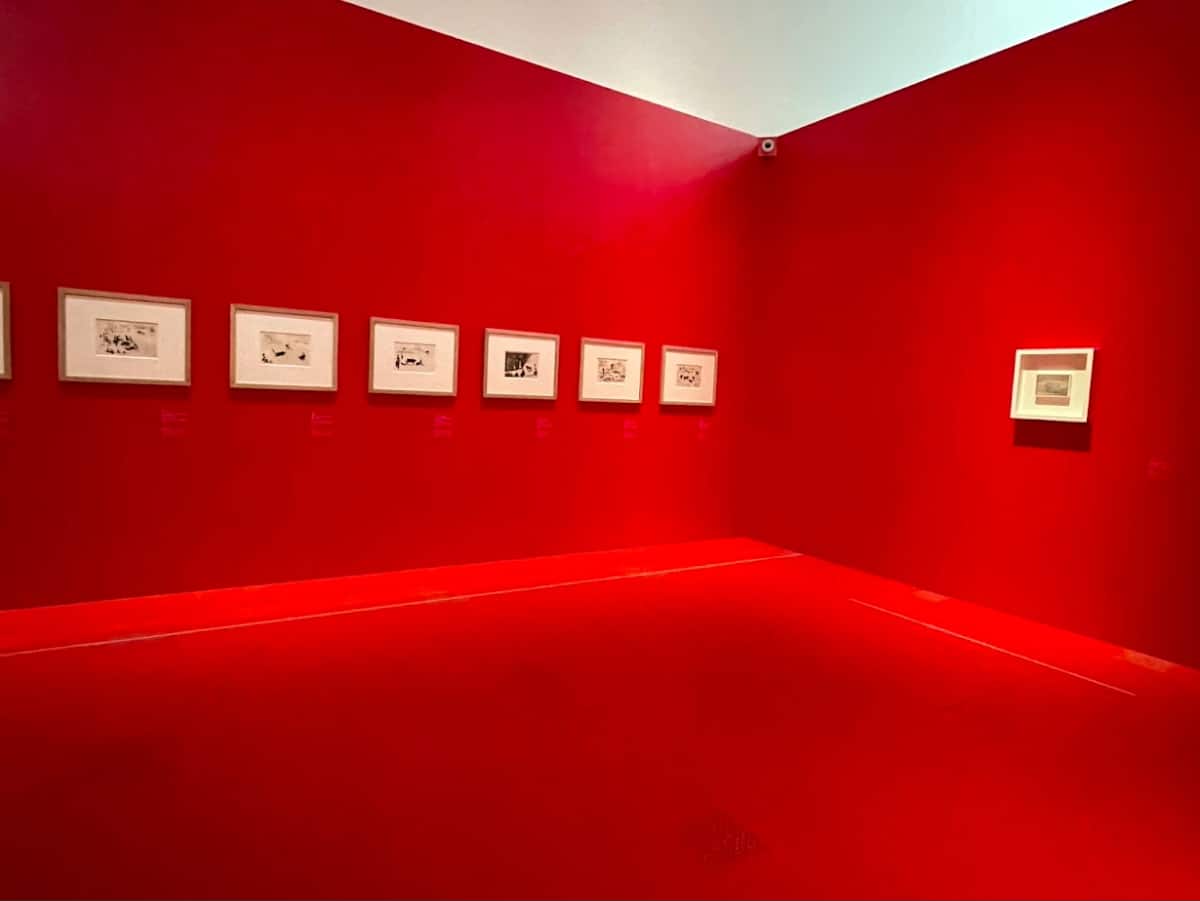
Bullfighting—a subject Picasso adored—also takes center stage in “Section 08: Bullfighting—A Theater Where Life and Death (or Sex and Death) Intersect.” The space is rendered entirely in red. Paul Smith likely chose this color—symbolizing both passion and blood—to highlight the raw power of bullfighting and the tragic moments shared between the bull and the matador. The design creates the illusion that one is standing inside an actual bullring.
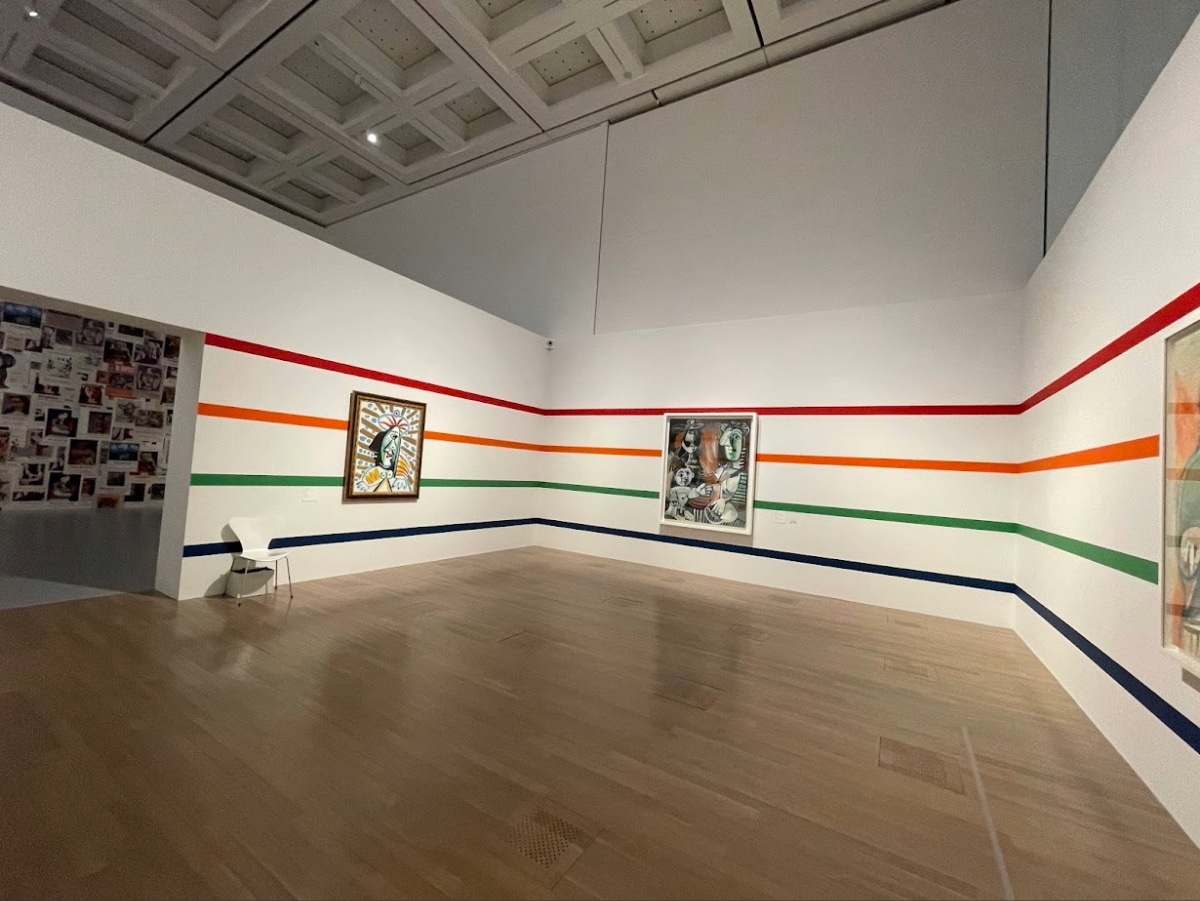
When one thinks of Picasso, the image that comes to mind is a man with thinning white hair wearing a striped shirt—an image cultivated by the media in the post-war era. Paul Smith has incorporated clothing—fitting for a designer—into this space: countless striped shirts suspended from the ceiling. Seeing them, anyone would instantly be reminded of Picasso.
The exhibition concludes with a space titled “Section 15: Picasso in Exhibitions—Exhibition Posters That Opened His Art to the Public,” where a multitude of exhibition posters are arranged across the space. This layout seems to suggest the role these posters played in making Picasso’s artistic practice accessible to the general public.
By viewing Picasso’s works amidst this vast array of posters, all the various elements that have surrounded the artist are elevated into something greater.
This exhibition is not merely about visually appreciating fine art; it is an experience to be felt with one’s entire body and senses. It is an exhibition I highly recommend experiencing firsthand.
Read also,
- Cai Guo-Qiang: Ramble in the Cosmos―From Primeval Fireball Onward
- Get Up Close to the Masterpiece “Guernica”
- Rubik’s Cube Inspiration with Kengo Kuma
- Kwaidan – Encounters with Lafcadio Hearn” Exhibition Celebrating Koizumi Yakumo and Setsu
- Special Exhibition Celebrating 160 Years of Amity between Belgium and Japan: A Journey of Artistic and Knowledge Exchanges at Kokugakuin University Museum